Home »
Screening sparks candid conversation on wildfire and forest health
BC Is Burning film and panel discussion emphasized prevention, active management, and community resilience
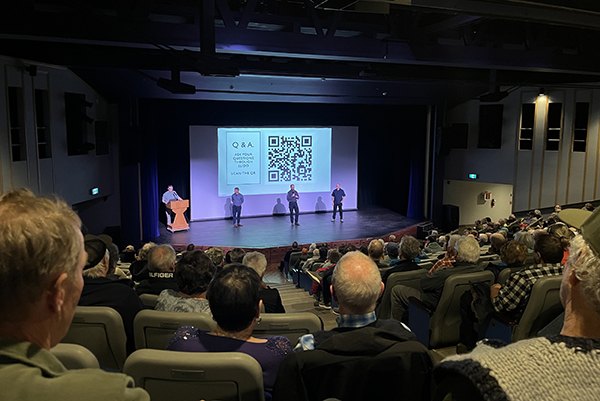
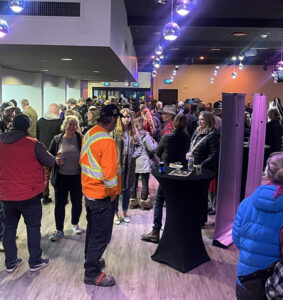
More than 380 community members gathered at the Key City Theatre on February 12 for the Cranbrook premiere of B.C. is Burning, a documentary film and panel discussion that examines the roots of British Columbia’s escalating wildfire crisis and explores practical, science-informed solutions to reduce risk and protect communities.
Hosted by VAST Resource Solutions with funding support from the Regional District of East Kootenay, the screening was followed by a live Q&A with producer, director, and writer Murray Wilson, alongside a panel of senior leaders with decades of frontline wildfire and forest management experience in British Columbia.
 “Wildfires today are no longer just natural events,” said Wilson. “They are the result of climate change colliding with decades of fire suppression. By putting out most fires for decades, we created a fire debt and unnatural fuel buildups that have left many forests over-dense, stressed, and vulnerable. Doing less doesn’t protect forests — it leaves the next fire to decide the outcome.”
Throughout the discussion, panelists reinforced a central message of the film: reducing wildfire risk requires more active management, not less. Thinning, strategic harvesting, and prescribed fire were highlighted as essential tools for restoring forest health, creating large-scale fuel breaks, and protecting communities before fires start.
Regional context played a key role in the conversation. While wildfire policy is often shaped far from the communities most affected, the impacts are experienced locally.
“As more areas are removed from the timber-harvesting land base and harvesting restrictions increase, our ability to manage forest fuels at both local and landscape scales is significantly reduced,” said Jamie Kroschel, RPF, Operations Manager with the Ministry of Forests, Rocky Mountain Forest District.
“At the same time, the scale of the wildfire challenge is immense, and meaningful fuel reduction requires industrial-level capacity — the equipment, workforce, and infrastructure needed to operate at landscape level. We don’t have to accept large-scale wildfire as inevitable, but it will take coordinated action from provincial, local governments, communities, industry, and private landowners to reduce this risk.”
Panelists noted individuals can help drive change and outlined some practical next steps. Attendees were encouraged to implement FireSmart measures at home, support local fuel reduction and restoration projects, and advocate for public funding that prioritizes prevention and forest restoration at least as strongly as emergency response.
“Following years of record-breaking wildfire seasons, the takeaway is that British Columbia cannot simply fight its way out of the wildfire crisis,” said Wilson.
“By combining strategic harvesting, thinning, and prescribed fire, communities can help restore forests to conditions where fire is manageable rather than catastrophic and where resilience is built before the smoke arrives.”
Photos submitted