Home »
More occupational cancers for firefighters recognized
Changes to the Workers Compensation Act will add eight more cancers to the workers’ compensation cancer presumptions for firefighters.
The provincial government is amending the Firefighters’ Occupational Disease Regulation under the Workers Compensation Act by adding eight cancers to the existing list of 18 considered to be occupationally acquired for firefighters. The cancers being added are: skin cancer, mesothelioma, soft tissue sarcoma, as well as laryngeal, tracheal, bronchial, nose, and pharynx cancers.
If a firefighter develops one of the listed cancers after a certain period of employment, it is presumed that the cancer arose from exposure during their employment. The firefighter is then eligible for workers’ compensation benefits without having to prove the cancer is work-related.
The additional cancers will be added to the list of diseases presumed to be linked to the work done by firefighters. The changes will make B.C. the province with the most comprehensive coverage of presumptive cancers in Canada, applying to more than 15,000 career, volunteer and federal firefighters, provincial wildfire fighters, fire investigators and firefighters employed by First Nations and Indigenous organizations in the province, a B.C. Ministry of Labour and Office of the Premier media release said.
“People in British Columbia count on firefighters in moments of crisis,” said Premier David Eby. “Whether battling house fires or wildfires, or responding to traumatic events, firefighters go above and beyond. We’re making sure they have support when they need it most.”
“Firefighters put their lives on the line for us in our time of need,” said Jennifer Whiteside, Minister of Labour. “And they bear the toll of physical and emotional exposure to hazardous conditions in their work. The changes announced today continues the years of work we have done together with firefighters, to ensure that the supports provided by the workers’ compensation system keep up with the changing realities of their work.”
The Workers’ Compensation Act was amended in 2005 to establish presumption for firefighters, listing eight cancers.
The minimum employment period to be eligible for the existing esophageal cancer presumption has also been reduced from 20 years to 15 years.
“Expanding the list of presumptive cancers and lowering the cumulative service for esophageal cancer acknowledges the risks we face on the job,” said Todd Schierling, president, British Columbia Professional Fire Fighters’ Association (BCPFFA). “It also underscores the commitment by the provincial government to the health and safety of all firefighters. This is the strongest set of protections in the country, and the BCPFFA will continue to advocate for the health, safety, and support for all members.”
Firefighters are still eligible for workers’ compensation benefits for work-related cancers that fall outside of the scope of the cancer presumptions. For example, if they develop a cancer not on the list or if they were employed for less than the specified minimum period of employment.
“As fire seasons become longer and more intense, exposure becomes a greater risk for wildland firefighters,” said Sebastian Kallos, Component 20 vice-president, BC General Employees’ Union.
“British Columbia is one of only five provinces in the country that provides this coverage for wildland firefighters, and these changes recognize some of the risks they face. The provincial government is taking appropriate steps to support those who put themselves between fires and communities.”
While firefighters represent only 0.5% of the provincial workforce, they account for 35% of all accepted cancer claims at WorkSafeBC between 2010 and 2025.
They include approximately 4,320 career firefighters, 8,800 volunteer firefighters, 700 firefighters employed by First Nations or Indigenous organizations, and more than 1,500 wildland firefighters employed by the province.
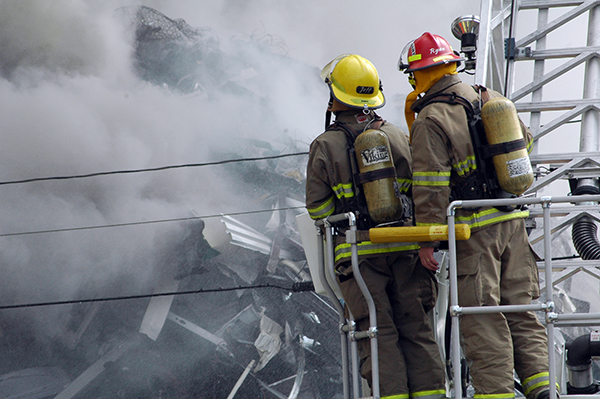
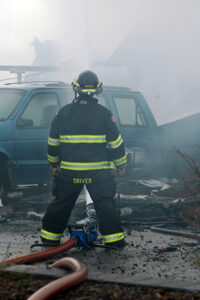
Lead image: Kimberley Fire Department firefighters battle a fire at a city salvage yard on May 10, 2014. e-KNOW file photo
e-KNOW