Home »
Chamber calls for balanced, transparent approach to DCCs
The Cranbrook Chamber of Commerce has released a Consultation Summary Report outlining its position on proposed Development Cost Charges (DCC) updates and the broader challenge of funding growth-related infrastructure in Cranbrook.
The report follows a consultation session hosted by the chamber with the City of Cranbrook, where chamber members heard directly from city staff on infrastructure funding pressures, construction cost escalation, and the rationale behind potential DCC increases.
The chamber acknowledges that infrastructure investment is essential to support growth, service reliability, and long-term economic health. Rising construction costs, increasing density, and provincial growth mandates make it clear that infrastructure funding decisions cannot be deferred indefinitely.
 However, the chamber emphasizes that how these costs are recovered, and how impacts are managed, is critical.
“There is no cost-free option,” the report states. “If growth-related infrastructure costs are not recovered through Development Cost Charges, they are ultimately borne by existing businesses and residents through higher taxes, utility charges, or reduced service reliability.”
At the same time, the report cautions that sharp or poorly structured DCC increases could negatively affect Cranbrook’s competitiveness, particularly for smaller projects, downtown redevelopment, and incremental business expansions that are vital to local employment and revitalization.
Key themes identified by chamber members include:
- The need to assess DCCs within the broader total cost of building and investing in Cranbrook;
- Risks to competitiveness if increases are not paired with mitigation tools;
- The potential for disproportionate impacts on smaller commercial renovations and infill projects;
- The shared views with the City of Cranbrook, of the importance of predictability, transparency, and clear communication.
The chamber’s report outlines clear conditions under which it would support DCC increases. Contingent to this is the adoption of a published cost-sharing framework grounded in fairness, competitiveness, sustainability, and transparency.
The chamber is also calling for a mandatory monitoring and response framework to accompany any DCC increase, including:
- Annual reporting on development activity, infrastructure costs, and DCC revenue performance;
- Predefined triggers that require review if development slows or costs escalate beyond expectations;
- Predetermined response actions, such as adjusting phasing or activating non-DCC mitigation tools.
“Support for DCC increases must be tied to accountability,” the report states. “Monitoring, triggers, and response actions need to be adopted at the time of approval, not left as future discretionary steps.”
The chamber is encouraging the city to protect and promote infill, redevelopment, downtown renewal, and small-to-medium scale projects using tools outside the DCC framework.
These include a continual review of permit process improvement opportunities, redevelopment credits, targeted tax exemptions, and improved front-end clarity to reduce surprise costs.
The report also highlights opportunities for joint advocacy with senior levels of government to secure infrastructure funding, particularly considering provincial density changes introduced under Bill 44.
The chamber reaffirmed its commitment to continued collaboration with the city, including structured consultation, shared advocacy, and ongoing engagement with the business community.
“The DCC discussion is ultimately about responsibility, timing, and predictability,” the report concludes. “A balanced, integrated approach is essential to protect investment confidence while ensuring Cranbrook can fund the infrastructure needed for sustainable growth.”
The full Consultation Summary Report is available through the Cranbrook Chamber of Commerce.
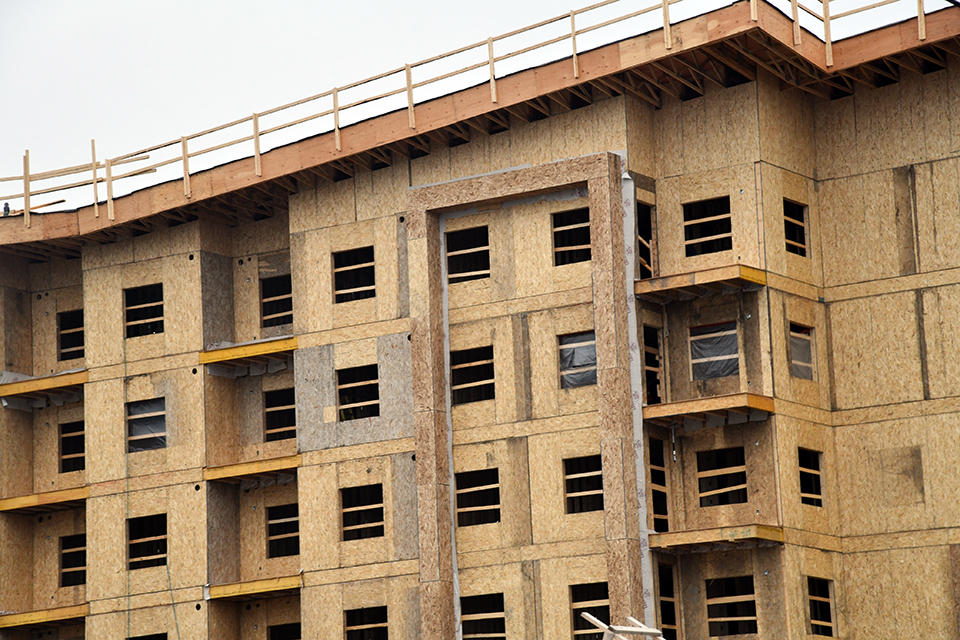
e-KNOW file photo
Cranbrook Chamber of Commerce