Home »
A year fighting wildfires and building community resilience
In 2025, the BC Wildfire Service (BCWS) worked tirelessly with people and communities to fight wildfires and build community resilience throughout the province.
“We’re coming off our second-worst wildfire season in Canadian history,” said Ravi Parmar, Minister of Forests. “From technology to equipment and training, all to protect people and communities, the BC Wildfire Service has shown us that they are a global leader in wildfire work. Thanks to the dedicated members working tirelessly to fight the threat of wildfire. In 2026, we will raise the bar even higher.”
Wildfires remain a reality on the landscape in British Columbia and across Canada. The province is continuing to build on the lessons learned by implementing wildfire predictive technology, using night-vision resources and working collaboratively with local, national and international partners to ensure a more resilient future, a B.C. Ministry of Forests media release outlined.
Since April 1, 2025, more than 1,350 wildfires burned an estimated 886,360 hectares of land in B.C. The 2025 season compared to the past five years:
* 2024: 1,697 wildfires, 1,081,159 hectares burned;
* 2023: 2,293 wildfires, 2,840,104 hectares burned;
* 2022: 1,801 wildfires, 135,235 hectares burned;
* 2021: 1,647 wildfires, 869,300 hectares burned;
* 2020: 670 wildfires, 14, 536 hectares burned.
Wildfires this season resulted in 42 evacuation orders, which affected approximately 2,600 properties and 91 evacuation alerts, which affected approximately 6,950 properties.
* 2024: 51 orders issued, 112 alerts;
* 2023: 208 orders issued, 386 alerts;
* 2022: 15 orders issued, 43 alerts;
* 2021: 181 orders issued, 304 alerts;
* 2020: three orders issued, nine alerts.
“People’s lives are increasingly being impacted by the effects of climate change and we must be proactive in how we prepare for climate-driven emergencies,” said Kelly Greene, Minister of Emergency Management and Climate Readiness. “Our first priority is to protect people and ensure that communities have the tools and resources they need to stay safe during emergencies.”
Canada faced its second-worst season in history of area burned, with more than eight million hectares lost countrywide. In 2025, the BCWS deployed personnel and equipment to six provinces and one territory, deploying to more out-of-province locations than any previous season, including: Alberta, Manitoba, Newfoundland and Labrador, Nova Scotia, Ontario, Saskatchewan and Yukon.
In January 2025, the BCWS also supported California Department of Forestry and Fire Protection (CAL FIRE) and the U.S. Forest Service in response to multiple fires in California, including the Palisades, Eaton and Hughes fires. BCWS personnel contributed to both management expertise and front-line firefighting capacity as part of the ongoing commitment to mutual aid and international wildfire response.
Canada’s forests and communities are facing increasingly severe wildfire seasons that have devastated ecosystems, displaced people and strained national capacity. To meet these challenges, B.C. hosted a National Wildfire Symposium that brought together national and international experts, provincial, federal and territorial governments, as well as key industry and Indigenous partners with the goal of sharing best practices and enhancing a national framework for wildfire resilience, the Ministry of Forests stated.
Discussions included:
* building a stronger national strategy for responding to and preventing wildfire;
* lessons from the 2025 wildfire season in B.C. and across Canada;
* unique insights in prevention, suppression, recovery and adaptation;
* new investments into better technology and equipment for wildland firefighting;
B.C. leading in research and innovation.
B.C. is exploring new technologies, approaches and research opportunities to build safer, more resilient communities. This includes:
* research into the health impacts of wildfire smoke, ash and dust to wildland firefighters;
* evaluating automated wildfire risk and fire growth modelling software to enhance wildfire planning and response;
* studying the best ways to create FireSmart structures and communities.
Ahead of the 2026 wildfire season, the province will continue to identify new technologies and opportunities for better prevention and response. B.C. will also continue to hire and train wildfire personnel, and to research ways to build a safer, more resilient B.C.
Through a range of research partnerships and a commitment to innovation, the BC Wildfire Service will continue to focus on the health, wellness and safety of wildland firefighters, as well as the natural science related to wildland fire behaviour, the ministry concluded.
Read the 2025 wildfire season summary.
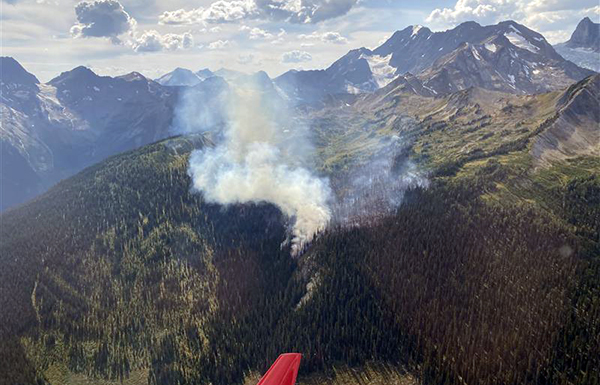
Lead image: An aerial look at the Silver Basin Wildfire from August 2025. BC Wildfire Service file photo
e-KNOW