Home »
Help spot bat-killing fungus
Biologists asking the public for reports of bats
The Kootenay Community Bat Program is asking the public for reports of dead bats and winter daytime bat activity in an effort to detect white-nose syndrome, a fatal disease, caused by a fungus, that has killed millions of bats.
“Almost everyone loves a good horror story with vampires and bats,” said Elodie Kuhnert, coordinator for the Kootenay Community Bat Program. “However, what’s truly spooky right now is that our bat populations might face severe declines in the near future due to white-nose syndrome.” All B.C.’s bats eat insects – there are no blood- or fruit-eating bats in Canada.
“B.C. bats are essential to our ecosystems and provide substantial economic benefits by helping control agricultural, forest, and urban insect pests including mosquitoes.
“We are working in collaboration with the Province of B.C. and researchers, to detect and prevent the spread of white-nose syndrome,” said Kuhnert. Residents are urged to keep an eye out for any daytime bat activity in winter and report any sick or dead bats up until May 31.
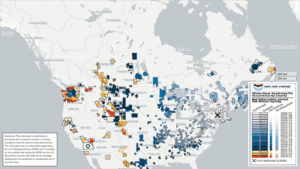
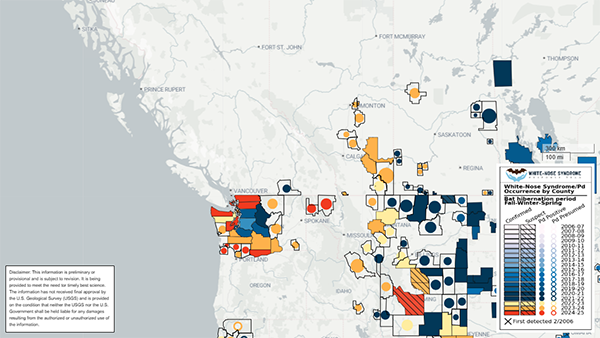
White-nose syndrome has killed millions of bats in North America since its detection in New York in 2006 and continues to spread westward.
“The disease has been found in bats just across the border in Washington and Alberta, and the fungus was found in a guano sample in the B.C. Boundary region. However, we have yet to see bats with evidence of the disease, which often appears several years after the fungus moves in,” said Kuhnert.
The B.C. government announced March 11 it has been detected in guano in metro Vancouver.
The fungus responsible for the disease spreads primarily through bat-to-bat contact during hibernation in cool, humid environments. White-nose syndrome does not cause illness in humans or pets, but it can be spread between suitable sites by contaminated clothing, gear, and equipment, particularly after recreating in or near caves. Avoid entering caves in winter and follow white-nose syndrome decontamination protocols if you must enter one.
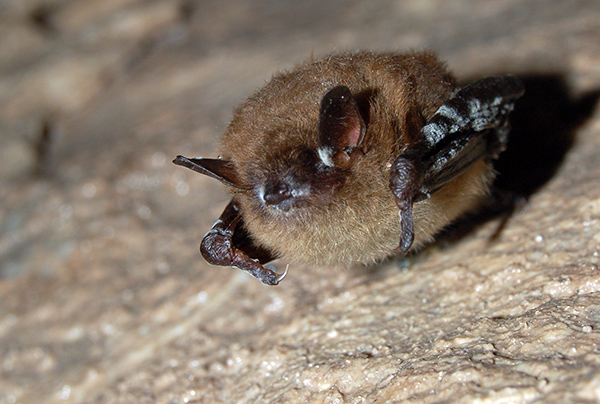
Bats suffering from disease can have the fungus growing on their muzzle, ears, and wings causing the bats to wake up more frequently during hibernation.
“The excessive energy expenditure and dehydration can lead to bats taking flight during daylight in winter in search of food and water,” said Kuhnert. “Unfortunately, many bats starve and die.”
“Seven of our 15 B.C. species could be severely affected by the disease,” said Kuhnert. The Little Brown Myotis and the Northern Myotis are both listed as Endangered in Canada primarily due to white-nose syndrome. Researchers are working on several promising options to reduce the severity and it may be possible to mitigate the effects of this wildlife health crisis.
All live bats should be left alone — keep your distance, snap a photo and report it to the Kootenay Community Bat Program.
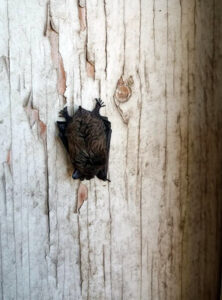
“Dead bats are usually found on the ground but sometimes bats can pass away hanging upside down,” said Kuhnert.
Never touch a bat with bare hands. Contact the Kootenay Community Bat Program for further directions on how to collect dead bats. Report bats at www.bcbats.ca, 1-855-9BC-BATS ext. 14, or Koote[email protected] (or [email protected]).
In partnership with the BC Ministry of Water, Land and Resource Stewardship, the Kootenay Community Bat Program provides information and promotes local stewardship and citizen science. The program runs thanks to funding from the RDCK local conservation fund, the Habitat Conservation Trust Foundation, Environment and Climate Change Canada, BC government, and BC Conservation Foundation and regionally with the support of numerous businesses, organizations, and volunteers.
Lead image: Hibernating myotis showing white patches of fungus growing on wings and face, signs of white-nose syndrome. Photo by Jordi Segers