Home »
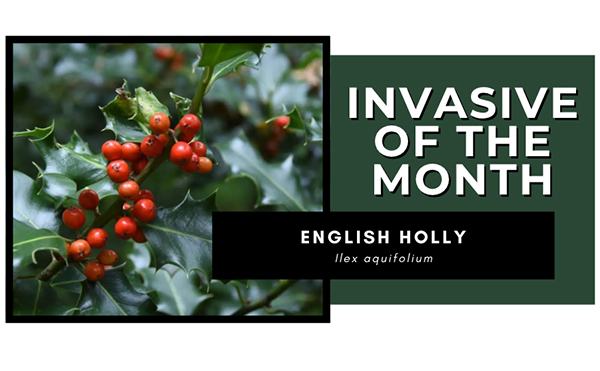
Invasive of the Month
By East Kootenay Invasive Species Council
English holly (European holly, Common holly) is known for its shiny red berries and dark green, spiny evergreen leaves.
It is commonly used landscape ornamental often used for holiday decorations and floral arrangements and intentionally introduced from its native range of Europe. English holly has become a serious invasive because of its adaptability to grow in shade or sun, and how easy its seeds are spread by birds. It will crowd out native species as well as monopolize groundwater.
 How to Identify:
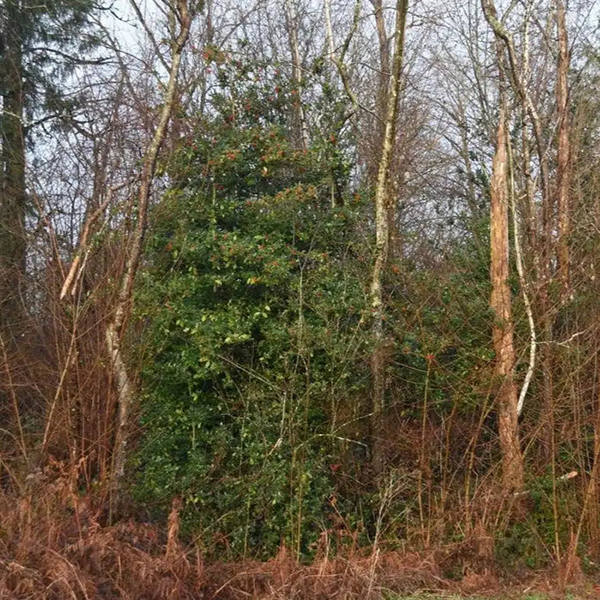
English holly can range from seven to 10 metres tall at maturity but is typically found at smaller heights of one to three m. It can also grow as creeping vines.
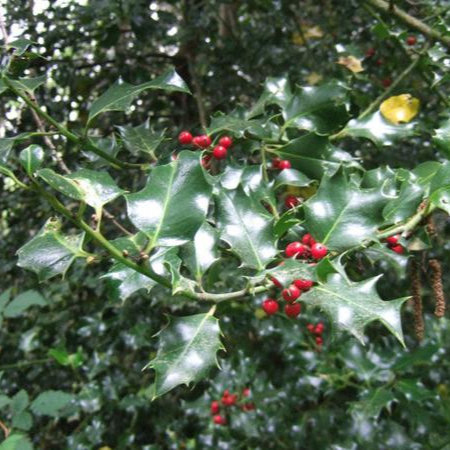
Flowers are small, white and sweetly scented. Female trees produce bunches of red, yellow or orange berries in winter that are poisonous to people but not to birds.
Leaves are thick, glossy, dark green and wavy, and one to three inches long, appearing alternately. They have sharp, stout spines along the edges, although leaves may be smooth on older branches.
 Impacts:
Social: The berries are toxic to humans and pets if ingested.
Ecological:
– Its deep roots are aggressive and outcompete native species for nutrients and water.
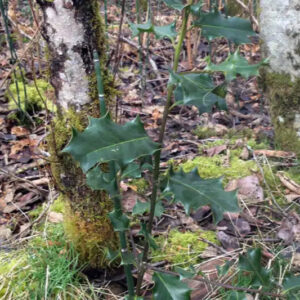
– Forms dense thickets that dominate the forest.
– English holly changes the composition of the environment. There is evidence that this plant alters soil conditions by adding large amounts of organic matter and sulphur.
– Large thickets will also outshade native shrubs and understorey plants.
 Management and Prevention:
Mechanical/Manual Control: Pulling or digging works well for small or young plants. Use a shovel to loosen soil and remove the full root mass. For shrubbier plants, cut branches with pruners or loppers before digging out roots. Larger tree-sized holly may benefit from girdling, which should be done by professionals. Cutting stems near the base can also be effective, especially when paired with herbicide.
Chemical Control: Triclopyr, imazapyr, and glyphosate are currently registered for use on English holly. Surface or stump applications after cutting help prevent resprouting – cut the stem low and apply herbicide directly to the exposed surface. Stem injection is another option. Avoid foliar applications, as evergreen leaves do not absorb herbicide well. Always read and follow label instructions.
East Kootenay Invasive Species Council photos
The East Kootenay Invasive Species Council works to minimize the threat of invasive species that impact the environment, the economy and human health in the East Kootenay region of B.C., and we couldn’t do it without you! as a non-profit, we rely on grant funding and the generous support of our community to operate. Your donation will help us continue to protect the East Kootenay from invasive species. Donate here.