Home »

Keeping up the fight against invasive mussels
Watercraft inspections, lake monitoring keep invasive mussels at bay in 2025
In 2025, B.C. worked with partners to stop invasive mussels from being introduced into the province’s waterways through community outreach, education, mandatory watercraft-inspection stations and lake monitoring through the B.C. Invasive Mussel Defence Program (IMDP).
Since their introduction into North America in the 1980s, invasive mussels have spread to four provinces and 24 states. Once introduced, invasive mussels can cause major damage, including altering food webs, harming habitats and clogging water-intake structures in power plants and water-treatment facilities.
If introduced in B.C., invasive mussels could have significant impacts to businesses, utilities, tourism and people, costing the province an estimated $64-129 million annually in control.
During the 2025 boating season, the B.C. Conservation Officer Service (BCCOS) deployed inspectors, field sergeants and invasive-mussel-detection dogs operating at two roving inspection crews and six watercraft-inspection stations. The stations are located at key border crossings along the Alberta and U.S. borders.
* 27,100 inspections were performed;
* 319 watercraft were identified as high risk;
* 170 decontaminations were performed;
* 84 watercraft were given quarantine periods to meet the required drying time;
* six watercraft were confirmed to have adult invasive mussels.
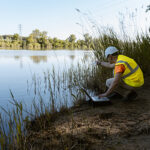
Lake monitoring is a critical step for early detection of invasive mussels. Sampling started in June for the 2025 season, and to date, more than 864 plankton tow water samples were collected from 84 priority waterbodies in the province. All samples tested negative for the presence of invasive mussels and there were no reported introductions of live zebra, quagga or golden mussels in B.C. waterways.
The IMDP’s success relies on the Province’s core funding and contributions from partners, including BC Hydro, Columbia Basin Trust, Columbia Power and FortisBC.
The federal government also plays an important role in preventing the introduction and spread of invasive species. Aquatic invasive species are provincially and federally regulated, and the Canada-U.S. border is federal jurisdiction. B.C.’s IMDP services work with the Canada Border Services Agency, responding to notifications of watercraft entering Canada through B.C.
The province continues to request the federal government to resume funding IMDP’s work at federal ports of entry and support the Province’s response preparedness, B.C. Ministry of Water, Land and Resource Stewardship and Ministry of Environment and Parks media release stated.
This partnership is more important with the recent detection of the golden mussel in California. The golden mussel poses an increased risk to B.C.’s aquatic ecosystems due to its ability to adapt to a wide range of environmental conditions and likely to survive in more parts of the province than zebra and quagga mussels.
B.C. collaborates with jurisdictions in Western Canada and the northwestern U.S. to implement a perimeter defence approach. In October 2025, B.C. together with its partner jurisdictions in Alberta, Saskatchewan, Yukon, Montana, Alaska, Idaho, Washington, Oregon and the Northwest Territories collectively affirmed that invasive mussels are the top aquatic invasive species (AIS) priority for the region and urged governments to continue to prioritize and strengthen prevention and response.
In 2024, after eight years of service, Kilo (pictured above) retired from the B.C. Conservation Officer Service Aquatic Species K9 unit. Kilo will also receive an honourable mention at the 2025 Premier’s Invasive Awards for innovation and excellence in honour of his years of service and dedication to the B.C. Public Service. The BCCOS is training a new detection dog to join the AIS K9 team.
Invasive Mussel Defence Program 2025 at a glance.
B.C. Conservation Officer Service file photo
e-KNOW