Home »
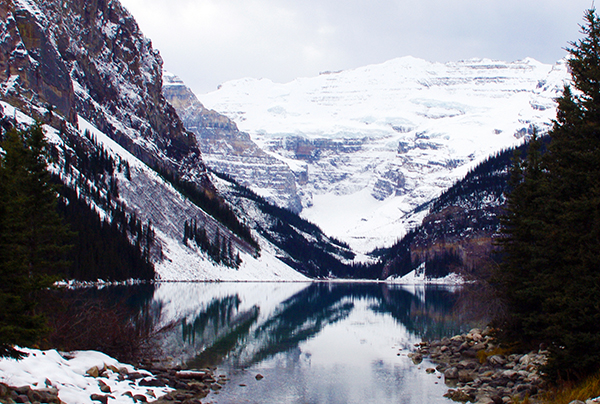
Lake Louise infested with whirling disease
National parks are now a vector for the spread of aquatic invasives to B.C. as Canada failing to protect lakes and rivers from invasive species: BCWF
The B.C. Wildlife Federation and the Environmental Law Centre have petitioned five federal ministries and departments to compel the government to address the spread of Aquatic Invasive species before it is too late.
Their responses are both underwhelming and dangerous, BCWF said in a media release.
“The responses we received from those ministries have been deeply disappointing,” said BCWF Executive Director Jesse Zeman. “Instead of grappling with the westward spread of invasive mussels and whirling disease, our elected officials are engaged in finger-pointing.”
As a result, a second lake near the B.C.-Alberta border has been infected by the parasite that causes whirling disease, which is deadly to various species of trout, salmon, whitefish, and char.
The presence of the parasite was just confirmed in Lake Louise in Banff National Park, on the heels of a confirmed detection in Emerald Lake in Yoho National Park.
The parasite has also been detected in other B.C. waterways.
“Our national parks are now a primary vector for spreading infestations by aquatic invasives,” said Zeman.
The BCWF and the UVic Environmental Law Centre last year petitioned Fisheries and Oceans Canada (DFO), the Canada Border Services Agency (CBSA) and the ministries of Environment, Crown-Indigenous Relations, and Agriculture. The brief pointed out their statutory obligations under section 22 of the Auditor General Act to raise urgent concerns about the federal government’s lack of sufficient funding for programs designed to prevent the spread of invasive mussels in British Columbia.
In response to the BCWF-ELC petition, the Ministry of Environment, Climate Change and Nature responsible for Parks Canada conceded that regulatory tools exist to restrict the use of motorized vessels and impose mandatory self-certification to ensure compliance with Clean, Drain, Dry protocols in national parks, BCWF reported.
“The actions taken to date are clearly not working. These recent infestations in our national parks are nothing short of a tragedy,” said Zeman. “Every boat entering a national park should be decontaminated, but obviously that is not happening.”
The response from DFO detailed the department’s efforts to fund preventative programs and noted a collaboration with CBSA and the government of British Columbia on five multi-day inspection events in 2025, which resulted in 361 inspections and two decontamination orders.
The Ministry of Crown-Indigenous Relations said that addressing invasive threats to First Nations is not within its mandate.
The Minister of Agriculture stated their department does not have a mandate or scientific expertise regarding the management of invasive mussels.
The Minister of Environment responded by emphasizing the limited jurisdiction the federal government holds over provincial matters concerning water and habitat management.
“Adding insult to the general neglect of British Columbia’s fight to preserve its waterways and lakes, DFO is spending many millions of dollars in Ontario where they already have established infestations,” said Zeman. “An ounce of prevention is worth a pound of cure, but the prevention side of the equation is not getting serious attention in British Columbia.”
“Not one federal minister is willing to take ownership of the fight against an imminent threat, which likely spells doom for B.C. lakes, freshwater fisheries as they are hit with whirling disease, and the hundreds of millions of dollars’ worth of public infrastructure that is routinely destroyed by mussel infestations.”
“This is a textbook case of pay-now-or-pay-later governance: invasive mussels are nearly impossible to remove once introduced, and the longer we delay meaningful federal action, the more certain—and costly—the damage becomes,” said Patricia Weber, staff lawyer at the University of Victoria’s Environmental Law Centre.
“This is why it is important that the federal government step forward now to help fund the programs necessary to keep these invasive species out of B.C. lakes.”
Lead image: Lake Louise. e-KNOW file photo