Home »
Permanent daylight saving time coming March 8
The Province of British Columbia announced today it is adopting permanent year-round daylight saving time (DST), except in the East Kootenay.
‘Spring forward’ on March 8 will be the last time change, ending twice-yearly clock changes, the Office of the Premier and Ministry of Attorney General stated, adding the reason is to improve people’s overall health, reduce disruptions for families, simplify scheduling and provide an extra hour of evening light during the winter months.
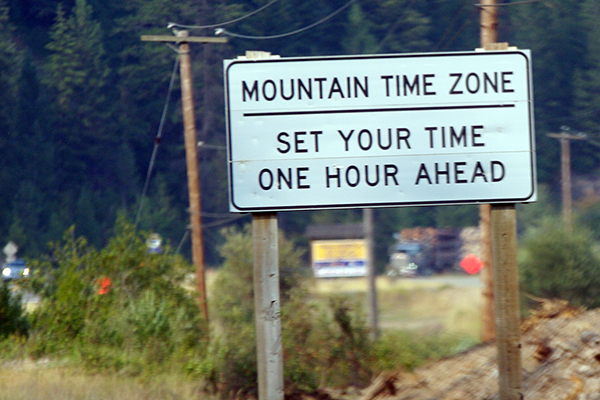
With the East Kootenay and Golden and Field situated in Mountain Time, whereas the bulk of the province is in Pacific Time, this means the region will remain aligned with Alberta and continue to switch between UTC-7 in the winter and UTC-6 in the summer, the province said.
East Kootenay and Golden currently switch between mountain standard time and mountain daylight time, in line with Alberta.
Just as they can today, local governments will retain the power to determine what time zone they observe. They can choose to shift to permanent daylight time and Pacific time, along with the rest of B.C., if they prefer, the provincial media release said.
People in northeastern B.C. (Peace River region and the northern Rocky Mountains) who currently observe mountain standard time (UTC-7) year-round will continue to do so.
In practice, this means they will align with the rest of B.C. in the Pacific time zone, though they are not required to adopt that specific label, the province said.
“There are a small number of communities in eastern parts of British Columbia that observe some form of mountain time instead of Pacific time. Those regions will not be affected by these changes. However, as a result of Pacific time no longer changing twice a year, many of these communities will be brought into greater alignment with the rest of British Columbia,” the media release said.
 “For example, Dawson Creek, which observes mountain standard time year-round, will be on the same time as most other places in British Columbia in the winter and summer months. Whereas places like Cranbrook that observe mountain time, but switch between standard and daylight times, will be aligned with the rest of the province during in the winter months, but will be one hour ahead in the summer.”
“Every parent knows that changing clocks twice a year causes a significant amount of chaos on already busy lives. British Columbians have been clear that seasonal time changes do not work for them,” said Premier David Eby. “This decision isn’t just about clocks. It’s about making life easier for families, reducing disruptions for businesses and supporting a stable, thriving economy. I am hopeful that our American neighbours will soon join us in ending disruptive time changes.”
People and businesses across the province have eight months to prepare for Nov. 1, 2026, when clocks would usually be turned back, but now will remain the same. At that point, the transition to Pacific time, the name of B.C.’s new time zone, will be complete.
Pacific time will be set seven hours behind co-ordinated universal time (UTC-7), matching the current offset used during daylight saving time.
“We have heard the overwhelming majority of people in B.C. who want to end the back-and-forth of seasonal time changes,” said Niki Sharma, Attorney General. “This shift offers more stability, supports public well-being and reduces twice-yearly, unnecessary disruptions to the routines of parents, shift workers, small businesses, pet owners and so many more. I look forward to all of us enjoying an extra hour of sunlight after work and school for many winters to come.”
In summer 2019, the province conducted a public engagement on time observance that saw participation from a record 223,000 people, with 93% supporting adopting year-round DST. Similarly, across all industry groups and nearly all occupational groups, support for year-round DST observance was higher than 90%, the media release said, suggesting there are many benefits to ending the seasonal time change, including:
* more consistency and fewer disruptions to sleep patterns, school schedules, and daily routines;
* more usable light in the evenings in winter, allowing more leisure time, participation in outdoor activities and consumer activity;
* reduced administrative burden for small businesses and service providers who may require less system reprogramming, schedule shifts and operational resets every spring and fall;
* more consistency for planning across transportation and technology services.
The Interpretation Amendment Act, which is the legal framework that enables the province to adopt permanent DST, became law in 2019. At the time, government chose not to bring it into force in order to co-ordinate timing with neighbouring U.S. states in the same time zone.
Recent actions from the U.S. have shifted how B.C. approaches decisions that merit alignment, including on time zones. Making this change now reflects the current preferences and needs of British Columbians, and helps ensure the province is well-positioned to thrive, even when circumstances across the border evolve, the media release stated.
Quick Facts:
* B.C.’s new time zone, Pacific time, will be aligned with the Yukon year-round.
* From November until March annually, Pacific time will match Alberta and other regions observing mountain standard time.
* From March until November every year, Pacific time will align with California, Washington, Oregon and other Pacific daylight time jurisdictions.
Neighbour jurisdictions like Washington, Oregon and California are all in the process of creating or enacting similar legislation.
e-KNOW file photos
e-KNOW