Home »
The quiet power of courage in modern fairy tales
Fairy tales have long relied on bold acts of bravery: dragons defeated, curses broken, and villains overcome through force or cleverness. In The Bloomfrost Chronicles, Cranbrook author Faye Smith-Hodgkinson offers a different vision of courage—one rooted in gentleness, patience, and emotional truth.
Across The Birth of Bloomfrost and The Season of Courage, Smith reimagines what it means to be brave in a world that fears change. Rather than presenting courage as the absence of fear, these stories frame it as the willingness to face fear without abandoning compassion.
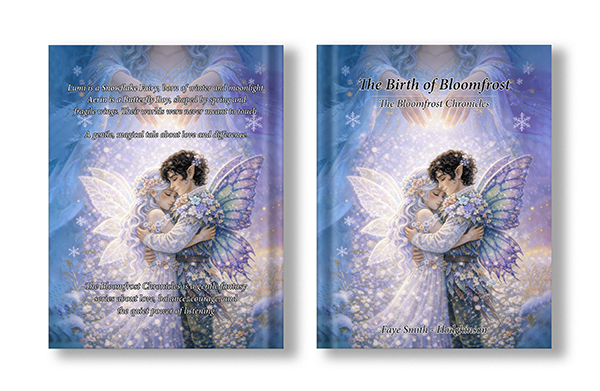
In the first book, courage appears quietly. Lumi and Aerin do not seek to disrupt the seasons. Their love emerges naturally, even accidentally, in a place where winter thins and spring hesitates. When Mother Nature intervenes, the choice presented is profound: return to their seasons, or remain together and accept transformation.
This moment is critical because it establishes the ethical heart of Bloomfrost. Love does not erase consequences. Change does not come without loss. Lumi may become less winter; Aerin may learn to endure cold. Courage here is not choosing happiness at any cost—it is choosing responsibility alongside love.
Bloomfrost, the season that results, is intentionally fragile. It requires care. It cannot exist if the world depends on it without understanding it. This idea becomes central in The Season of Courage, where fear begins to fracture what love created.
The second book expands the scope of courage beyond the personal and into the collective. The seasons themselves become afraid—of being forgotten, restrained, diminished, or rushed. These fears mirror human anxieties about change, identity, and loss of control. Bloomfrost becomes a symbol not just of love, but of uncertainty.
Rather than confronting fear with force, Lumi and Aerin walk directly into it. They separate to remind winter and spring of what they are, then reunite to show that balance is still possible. Their courage is steady and visible. They do not hide. They do not shout. They stay.
This approach reflects a modern understanding of emotional resilience. Courage is not loud. It does not dominate. It holds space. It listens. It remains present even when outcomes are uncertain.
Faye Smith-Hodgkinson’s portrayal of fear is especially notable. Fear is not a villain to be destroyed—it is a response to uncertainty. When fear takes shape near the end of The Season of Courage, it asks a simple, haunting question: “What if love fails?” The answer offered is not certainty, but commitment. If love fails, we try again. Together.
For readers of all ages, Bloomfrost offers a meaningful redefinition of strength. Children encounter a magical world where kindness shapes reality. Adults find a reflection of relationships, leadership, and change that feels deeply relevant.
By the end of the second book, Bloomfrost no longer belongs only to Lumi and Aerin. It belongs to the world. This is perhaps the most powerful statement of all: that love and courage are not possessions, but shared responsibilities.
In a time when fear often speaks louder than compassion, The Bloomfrost Chronicles by Faye Smith-Hodgkinson remind us that courage can be gentle, that balance requires listening, and that true magic grows when we face uncertainty without letting go of one another.
Submitted