Home »
B.C. introduces code of conduct for local elected officials
The provincial government is introducing legislation aiming to strengthen conduct standards for local elected officials.
The introduced legislative amendments would allow the province to establish a mandatory, province-wide code of conduct for all local elected officials in B.C. with clear processes for complaints, investigations and sanctions.
Conduct issues can include bullying or harassment in meetings, harassment of staff or disrespectful behaviour between elected officials that can make governing a community challenging.
“Every community benefits from local leadership that is accountable and focused on priorities that matter to people,” said Christine Boyle, Minister of Housing and Municipal Affairs.
“When conduct issues escalate, they can sidetrack councils and regional district boards from their work and undermine public confidence. Establishing a mandatory code of conduct and a transparent process to address conduct issues will provide clarity and predictability for councils and boards across B.C., strengthening accountability and giving citizens greater confidence that their local representatives are acting responsibly and in the public interest.”

“While many local governments have conduct codes today, they are not consistent across jurisdictions and often lack clear steps to address conduct issues,” said Brittny Anderson, Minister of State for Local Governments and Rural Communities.
“Once in place, a provincial code of conduct will ensure all local elected officials are held to the same ethical standards across B.C., help avoid dysfunction at the local level and improve fairness and public trust in local governments.”
A standard code of conduct and consistent processes for code complaints will strengthen accountability, help prevent prolonged disputes within local governments and reduce legal costs that strain local budgets, a Ministry of Housing and Municipal Affairs media release said.
The province has been working in partnership with the Union of B.C. Municipalities (UBCM) and the Local Government Management Association of B.C. (LGMA) on these amendments in response to calls from advocates, including the B.C. ombudsperson, to make these changes and enhance the local government responsible-conduct framework.
Consultation and co-operation with Indigenous partners and First Nations is ongoing for this important work.
“Local governments have been consistent in their calls for additional tools to strengthen the practice of responsible conduct,” said Cori Ramsay, president of the Union of B.C. Municipalities. “This legislation will establish a common standard throughout the province for local elected-official conduct and the handling of complaints and will strengthen the application of sanctions when warranted. UBCM appreciates the careful consultation the province has followed in developing these legislative changes.”
Under the proposed legislation:
* All municipalities and regional districts in B.C. would follow the same complaint and investigation steps, supported by independent investigators.
* A defined range of sanctions would be available for the councils and regional boards, including a maximum 90-day suspension without pay, with clear reporting requirements for the public to ensure transparency.
* A single provincially established code would set a standard of behaviour for all local elected officials in B.C.
Together, these proposed measures will give councils and regional boards a predictable and efficient path to resolve conduct issues, and provide transparent information to residents about outcomes, wherever they live in B.C., the ministry said.
If passed by the legislature, the amendments will allow a province-wide code of conduct to be set by a regulation, expected to be in place for the new councils and boards following the October 17, general local elections.
Candace Witkowskyj, Local Government Management Association of B.C.executive director, Local Government Management Association of B.C. stated, “The LGMA welcomes the province’s efforts to strengthen the responsible conduct framework for local elected officials. Informed by feedback from local government, establishing a clear, consistent and provincewide mandatory code of conduct – supported by transparent complaint, investigation and sanctions processes – will enhance accountability, support healthier governance relationships and strengthen public trust in local decision making.
“These amendments represent an important step in supporting local governments who serve communities across B.C.”
The B.C. government introduced Housing and Municipal Affairs Statutes (Code of Conduct) Amendment Act, 2026 – bill 17 to amend the Community Charter, Local Government Act, Vancouver Charter, Islands Trust Act, and The Cultus Lake Park Act on April 2.
Approximately 68% of all municipalities and 81% of all regional districts have adopted a code of conduct; 29% of local governments do not have an enforcement mechanism for their code.
Given the differences in the governance structure of school boards, the responsible conduct legislation will not apply to school boards at this time, though all 60 boards of education have trustee codes of conduct already.
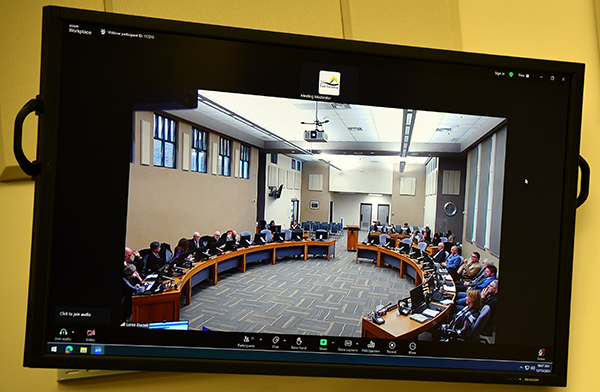
e-KNOW file photo
e-KNOW