Home »
Life Between the Monuments
By Stan Chung
Op-Ed Commentary
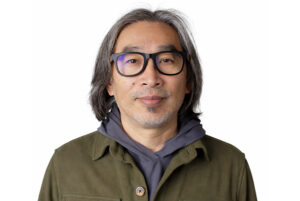 I have lived in Cranbrook for more than a decade. Sure, I know a few stories but maybe not enough about how we lived together.
I came to Canada from Korea when I was four. I have spent much of my adult life in institutions that tell stories about themselves: colleges, governments, boards and museums.
We are getting better at telling stories about harm. We acknowledge the land, preserve buildings and name laws and institutions that injured people.
All of this is necessary. But living here has made me wonder whether we are missing another part of the historical “record.”
How did people actually live together?
Long before Cranbrook existed, this was Ktunaxa ʔamakʔis. The place settlers called Joseph’s Prairie was known to the Ktunaxa as ʔakisqakⱡiʔit. Chief Joseph had a home, garden and horses on this prairie before settler control of the land displaced his family.
Then people began arriving from elsewhere.
Gold brought Chinese miners into the East Kootenay in the 1860s. The railway reached Cranbrook in 1898. Chinese residents established laundries, restaurants, stores and homes. A Chinatown grew near where I live.
Canadian law made their lives incredibly difficult. There was the head tax and then the Chinese Immigration Act which banned immigration for 24 years. Men who worked here could spend years separated from wives and children.
But the lives inside Cranbrook’s Chinatown tell us more than the laws.
Hoy Ngui Yee Shee lived here with her husband, Lee Chow Nam. Her son Hank Lee remembered his mother growing vegetables and giving them to people who did not have enough food. She shared Chinese herbal remedies with people who could not afford Western medicine or did not trust it.
The Nu-Way Cafe opened in 1914 and remained part of Cranbrook until 1996.
Isn’t eighty-two years a long time to feed a town?
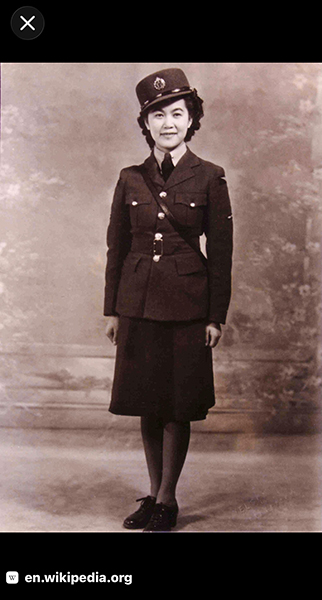
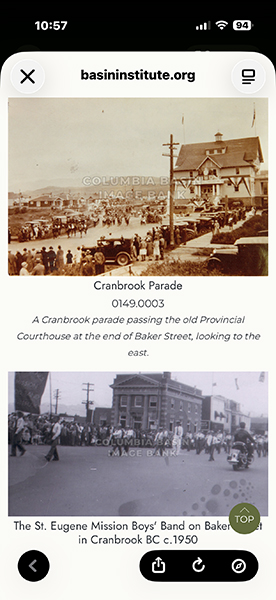
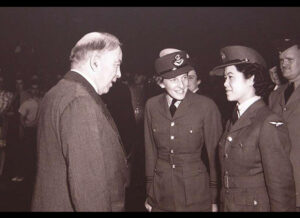 In 1942, Jean Lee of Cranbrook enlisted in the Women’s Division of the Royal Canadian Air Force. Canada repealed the Chinese Immigration Act in 1947. The next year Cranbrook’s Chinese community paraded down Baker Street.
Around 1950, another group of children marched down the same street: the St. Eugene Mission Boys’ Band.
The histories are not equivalent. Yes, the street is the same.
Ktunaxa people were not immigrants seeking a place in Canada. Canada had imposed itself on Ktunaxa homelands. Children were taken from their families to St. Eugene. The large brick residential-school building was completed in 1910. The school closed on June 30, 1970.
 The consequences did not disappear when the doors closed. Neither did the building.
It stood largely empty for about twenty years. In the early 1990s, Ktunaxa communities had to decide what to do with it. They could demolish it or leave it standing. Elder Mary Paul offered another possibility: if culture had been taken away inside that building, culture could be returned there.
The communities eventually chose something else.
Today the former school is part of St. Eugene Resort. The Ktunaxa Interpretive Centre tells the residential-school history, but visitors also encounter Ktunaxa language, creation stories and culture.
Nothing about this makes what happened in the building less terrible or less real for current survivors and their families. What interests me is that the past did not get to determine the only possible future of the place.
This is where I have begun thinking about “Life Promotion,” an Indigenous approach advanced by the Thunderbird Partnership Foundation.
Life Promotion asks us to look beyond preventing harm toward the conditions that support life and wellness.
What happens if we look at the history of this place that way?
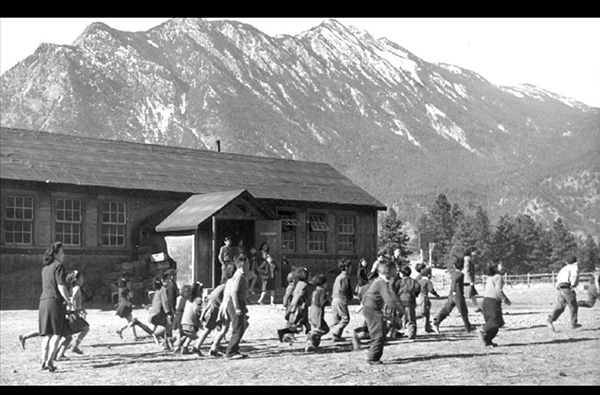
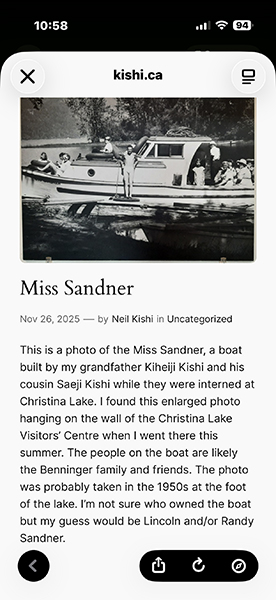 In 1942, more than 22,000 Japanese Canadians were being uprooted from the B.C. coast. At Christina Lake, 109 people lived at a self-supporting internment site. Children went to school. Adults worked. The Kishi family continued building boats. Three Japanese Canadian baseball teams—the Cubs, Lumberjacks and Giants—played teams from Grand Forks and Greenwood.
Around Grand Forks, Japanese Canadians worked on Doukhobor farms. Children from the two communities attended school together. One Japanese Canadian woman remembered Doukhobors among her best friends. She learned Russian songs and learned to make borscht.
Doukhobor mill owner Ivan Sherbinin employed Japanese Canadians at his Midway sawmill and logging operations. When he died in 1946, a Japanese Canadian delegation attended his funeral.
I keep returning to details like these because governments created categories much more successfully than people lived inside them.
The same pattern appears closer to Fernie. Before the First World War, Germans, Ukrainians and other immigrants worked beside one another in East Kootenay mines. Then war turned some of those workers into enemy aliens and Morrissey became an internment camp.
A photograph from a 1909 Labour Day parade in Fernie shows carpenters marching beneath a German flag. Within a few years, the same identity could help make a person an “enemy.”
We all know people did not suddenly become different people. The category around them changed.
Farther east, Blackfoot artist Henry Heavyshield has told how his grandparents became friends with Chinese shopkeepers in Lethbridge. Blackfoot customers could face discrimination in white establishments. Chinese merchants lived under racial exclusion themselves. In that circumstance, being able to walk through someone’s door and be welcomed really mattered.
I don’t want to make these encounters prettier than they were. Settlers occupied Indigenous lands. People carried prejudices. Communities competed and sometimes harmed one another. These histories are not interchangeable.
Life promotion is not a happier version of history.
It asks us to notice how people continued making life in the middle of it.
We can see that happening now.
On June 12, 2012, Filipino residents gathered at Cranbrook City Hall for Philippine Independence Day. The Philippine flag went up. Food was shared.
Then everybody went home. Somebody went back to work. Children went back to school.
Our schools may be the most concrete place to see what has happened to all these separate histories. In 2022/23, Southeast Kootenay School District No. 5 enrolled 6,012 students. More than 1,100 identified as Indigenous.
A Ktunaxa child, a Filipino child, a child whose grandparents came from Ukraine, a Korean Canadian child and a child whose family has been here for generations can sit in the same classroom.
Some children carry more than one of those histories themselves.
That seems more important to me than a census table.
We preserve proclamations and official photographs. We rarely preserve the lunch shared at school, the ride home after practice or the family that shows up when another family needs help.
Yet after more than a decade here, I suspect much of belonging is made through precisely these exchanges.
Ktunaxa Nation Council and regional tourism organizations have also changed how this region describes itself. Ktunaxa Homelands puts Ktunaxa language, place names and stories into the way residents and visitors encounter the places around us.
Ktunaxa people are not simply being added to Cranbrook’s history. They are helping narrate its present.
That matters to me personally.
I was born in Korea, a country whose modern history carries its own experience of colonization. I came to Canada as a child. Decades later, I found myself living on Ktunaxa homelands and working with Ktunaxa people. People like Codie Morigeau and Joe Pierre taught me something I had not understood when I arrived here: our stories eventually come back to land.
That does not make my history equivalent to theirs. It gives me a responsibility to understand the difference.
 It also makes me curious about everybody else who arrived here and tried to make a life.
Hoy Ngui Yee Shee grew vegetables and gave some away. The Nu-Way Cafe fed Cranbrook for 82 years. Indigenous children marched down Baker Street while the institution responsible for their band was trying to remove their culture. Japanese children played baseball at Christina Lake. A Japanese Canadian girl learned a Russian song from a Doukhobor friend. People travelled to another community’s funeral because the man who died had mattered to them. Filipino families raised their flag at City Hall. Today our children sit beside one another at school.
None of this repairs the history.
Maybe that is why it matters.
If we record only the places where life was diminished, we make a strange mistake. We allow the people and institutions that created the categories to determine the categories of history.
Let’s get it right: There is another record.
It is in gardens, restaurants, languages, jobs, songs, classrooms, friendships, marriages, funerals and meals.
It is the record of people making a life in the presence of other lives.
Thunderbird’s idea of life promotion helps me see that record differently.
We should know where people were harmed. We should know the dates, laws, numbers and names.
But Cranbrook’s history is also what people did next. It is about what we did for one another.
Images submitted
– Stan Chung, PhD, lives in Cranbrook. He is a writer, strategic adviser, speaker, and 2026 Governor General’s laureate. Stanchung.ca