Home »

Slight decrease in calls for CFES In Q2
Cranbrook Fire & Emergency Services (CFES) responded to 543 calls for service during the second quarter of 2026, a nine per cent decrease from the 589 calls recorded in Q1, indicating a modest easing in volume while overall service demand remained significant.
The overall mix of incidents remained consistent with previous quarters. fire and rescue incidents accounted for 29% of responses, while pre-hospital care represented 71%. Incident activity also remained concentrated in and around the downtown core, consistent with recent reporting periods.
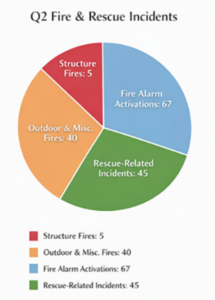 Fire & Rescue Activity
CFES responded to 157 Fire and Rescue incidents, including:
Structure fires – five;
Outdoor and miscellaneous fires – 40;
Fire alarm activations – 67;
Rescue-related incidents – 45;
Compared to the previous quarter, fire alarm activations and rescue incidents remained relatively stable, suggesting no material shift in operational demand, while outdoor and miscellaneous fires decreased from 53 to 40 incidents.
Pre-Hospital Care Activity
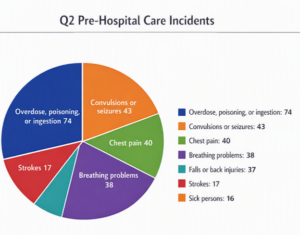 CFES attended 385 Pre-Hospital Care incidents during the quarter. The most common call types included:
Overdose, poisoning, or ingestion – 74;
Convulsions or seizures – 43;
Chest pain – 40;
Breathing problems – 38;
Falls or back injuries – 37;
Strokes – 17;
Sick persons – 16.
While overdose-related incidents remained the most common medical call type, responses in this category declined from 119 incidents in Q1 to 74 in Q2, representing a notable reduction that should continue to be monitored in future reporting periods.
As we move into the summer months, wildfire activity has already emerged in other parts of British Columbia, and the current period of hot, dry weather may increase wildfire risk across the Kootenay region.
CFES staff are prepared and continue to monitor conditions closely while maintaining readiness to respond to wildland and interface fire incidents.
 “Residents are encouraged to review their emergency preparedness plans, update emergency kits and supplies, and confirm evacuation plans with household members,” said CFES Chief Scott Driver. “To stay informed during an emergency, we strongly encourages residents to register for the Voyent Alert! notification system through the Regional District of East Kootenay, so they can receive timely and reliable information when it matters most.”
Sign up for Voyent Alert! notifications.
Summary
The second quarter reflected a modest reduction in overall call volume while confirming that CFES continues to face consistent core service demands across both emergency medical and fire and rescue responses.
“These trends reinforce the importance of maintaining flexible emergency service capacity that can respond to daily community needs while remaining prepared for seasonal wildfire and interface fire risk,” says Chief Driver.
“As Cranbrook continues to grow and evolve, CFES remains committed to providing responsive, reliable service and aligning its resources, training, and operational capabilities with community risk and service expectations.”
e-KNOW file photo
City of Cranbrook