Home »
DUC restoration projects tested by recent flooding
High water levels demonstrate effectiveness of recent dike breaches, reconnecting southern interior B.C. rivers to their floodplains
In spring 2026, rising waters in the Kootenay River and Columbia River put two of Ducks Unlimited Canada’s (DUC) major floodplain restoration projects to the test.
The result: water flowed into newly reconnected wetlands and floodplains, demonstrating the value of restoring natural hydrological processes in a changing climate.
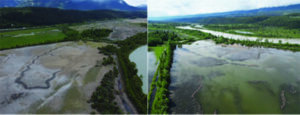
In fall 2025, DUC and project collaborators completed restoration work at North Bummers Flats, near Cranbrook, and Moberly Marsh, near Golden. These multi-year projects aim to transform engineered wetlands previously managed through pumps, dikes and water control structures into natural, self-sustaining floodplains.
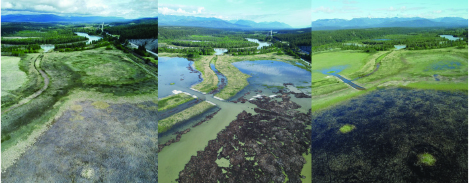
During this year’s spring freshet, rising river water levels coursed into floodplain areas through dike breaches, turning dry floodplains into a lush mosaic of shallow open water, emergent marsh and shrub swamp habitats.
The first phases of these two projects resulted in an impressive area of restored habitat – 155 hectares (383 acres) at North Bummers and 57 hectares (142 acres) at Moberly Marsh. Combined, this restoration area is about the size of 1,345 hockey rinks.
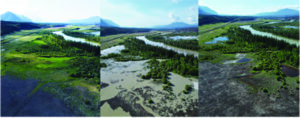
“This year we were very fortunate to get the right conditions to test the project design when high temperatures, a higher-than-average snowpack and heavy rains coincided to create an event of rising and fast-flowing water,” said Matthew Wilson, DUC’s Head of Conservation Programs for British Columbia and lead on both projects.
“The re-activated floodplain helped to slow and spread water across the landscape, supporting flood control while also transforming the lands into vast wetlands supporting high biodiversity.”
Ducks Unlimited Canada is working with ʔaq̓am, The Nature Trust of BC (NTBC) and the Province of British Columbia at Bummers Flats and with BC Parks at Moberly Marsh, which is within Burges James Gadsden Provincial Park.
The two projects reflect a growing acceptance of restoration approaches that work with natural systems. By restoring floodplains and wetlands, landscapes regain their natural ability to store water, distribute nutrients, support biodiversity and adapt to increasingly variable weather conditions including flooding and drought.
Teams will monitor the effects of the natural flooding to further understand how these sites respond to restoration efforts and to guide future projects across British Columbia.
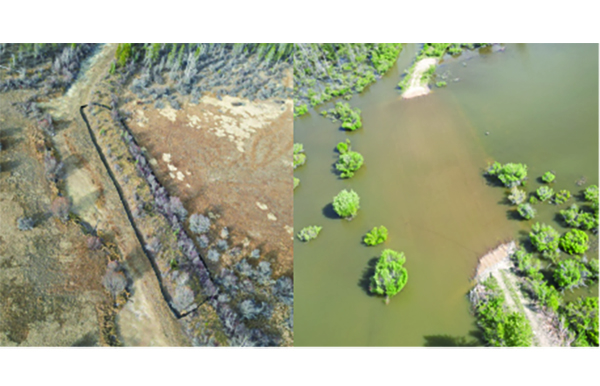
Lead image: Left image: an overhead view of a dike bisecting Moberly Marsh within Burges James Gadsden Provincial Park (the black border is fencing that was installed prior to construction to prevent amphibians from hibernating in the construction area). Right image: the same vantage point after the Columbia River was reconnected by breaching the dike and reconnecting the two habitats. DUC photos
Ducks Unlimited Canada