Home »
Elk Valley Resources and Nupqu handed BCTRCR award
The 49th BC mine reclamation award ceremony recently took place in Fort St. John as part of the annual BC Mine Reclamation Symposium.
The multi-day event features mine tours and technical presentations and includes with an awards ceremony to recognize excellence in environmental stewardship and mine reclamation across British Columbia.
Since 1969, mining companies have been legally required to reclaim mine sites at the end of their operating life. B.C. was among the first jurisdictions in Canada to introduce mine reclamation legislation and the first to extend this policy to mineral exploration sites. Since then, the provincial government under the Ministry of Mining and Critical Minerals has required companies post a reclamation security bond before work at any site.
The British Columbia Technical and Research Committee on Reclamation (BCTRCR) presented awards to individuals and organizations demonstrating leadership, innovation, and best practices in restoring post-mining landscapes across the province.
2026 Winners
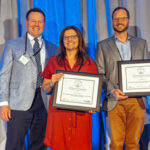
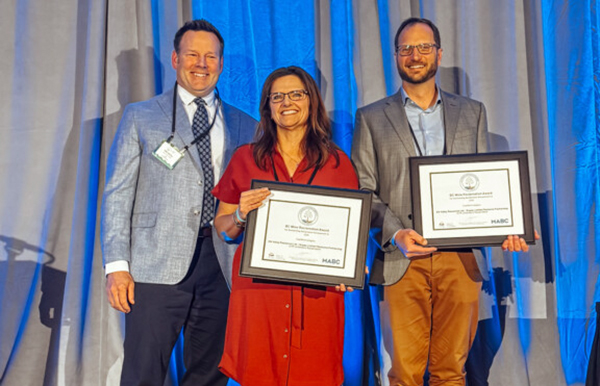
Elk Valley Resources (EVR) and Nupqu Resource Limited Partnership secured the Steelmaking Coal Mine Reclamation Award for a leading example of progressive mine reclamation and partnership between industry and Indigenous communities.
Nupqu, a Ktunaxa business, and EVR have come together to restore land with native plants grown from locally collected wild seed. Nupqu collects native seed from across the Elk Valley, building a growing seedbank that supports EVR’s reclamation efforts. Through matching species to specific reclamation sites, the program helps return native vegetation to its natural habitat while supporting biodiversity and ecosystem restoration. Each year over 60 different plant species are collected, with more than eight million seedlings planted since 2022.
Beyond environmental benefits, the collaboration has created economic opportunities for the Ktunaxa Nation and fostered innovation in seed collection, propagation, and planting techniques. The program demonstrates how industry and First Nations partners can work together to achieve long-term environmental and community outcomes.
BHP Canada won the Jake McDonald Annual Reclamation Award. This award recognizes BHP’s progressive reclamation of the past-producing Island Copper Mine near Port Hardy at the northern end of Vancouver Island. While the mine closed in 1995, BHP has continued to support its reclamation through ongoing monitoring, adaptive management, and improvements to the site’s water management infrastructure.
These efforts have strengthened environmental protection, enhanced the long-term reliability of the Pit Lake treatment system, improved operational flexibility through remote capabilities, reduced worker safety risks, and increased resilience to extreme weather and power outages. Together, these initiatives demonstrate the success of the mine’s reclamation strategy and innovative water management approach more than 30 years after closure.
Glenda Ferris received a Special Tribute Award in recognition of her lifetime contributions to mine reclamation in Northern BC. For more than 40 years, Glenda has contributed towards advancing reclamation practices locally, nationally, and internationally through her work reviewing mine plans and performance, shaping policy and guidelines, and helping ensure regulatory compliance across industry and government.
Matthew Barnette, Jess Rodgers and Amanda Schoonmaker were awarded the Tony Milligan Book Award created in recognition of the contributions Tony Milligan made to mine reclamation.
Rabeya Shikdar Orpa received the Jake McDonald Scholarship for Mine Reclamation Award. Rabeya is working on completing her MSc in Environmental Science program at Thompson Rivers University. She is passionate about reclamation research, and her project focuses on native species use in mine reclamation. Rabeya is conducting a large greenhouse trial that evaluates the effectiveness of various soil amendments and fertilizers in establishing native plant species in post-mining environments.
Can Zhang, a PhD student at UBC, received the Poster Award for his poster, “Physics-Informed Machine Learning for Mine Waste Rock Drainage Prediction and Climate Change Impact Assessment.”
More than 250 people attended this year’s symposium, including biologists, engineers, mine workers and representatives, partners and members of First Nations communities, and students.
The TRCR originated in the early 1970s in response to a demonstrated need in the British Columbia mining sector for greater government-industry communication in the area of environmental protection and reclamation. Membership is drawn from industry, provincial and federal government agencies, exploration and mining associations, and universities and colleges. The TRCR sponsors the BC Mine Reclamation Symposium.
Lead image: L-R: Tim Antill, Chair, BC TRCR Awards Subcommittee; Kori Singleton, Elk Valley Resources and Aaron Higgs, Nupqu. BCTRCR photo
British Columbia Technical and Research Committee on Reclamation