Home »
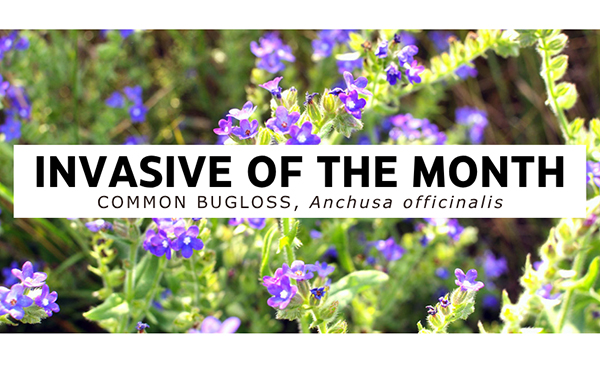
Invasive of the Month
By East Kootenay Invasive Species Council
Common bugloss (Alkanet) is a hairy, fleshy, plant native to Europe, Western and central Asia. It invades disturbed, sunny areas such as roadsides, pastures, and hay fields, which reduces the yield of these crops. It spreads primarily through seed, but root fragments can propagate. Bugloss leaves include alkaloid compounds which are toxic if ingested by humans or livestock. Common bugloss is designated as a Regional Noxious Weed by the BC Weed Control Act.
IDENTIFICATION:
 Seeds/Fruit: Each flower produces a cluster of 4 barbless nutlets. The nutlets are squat and asymmetric or conical.
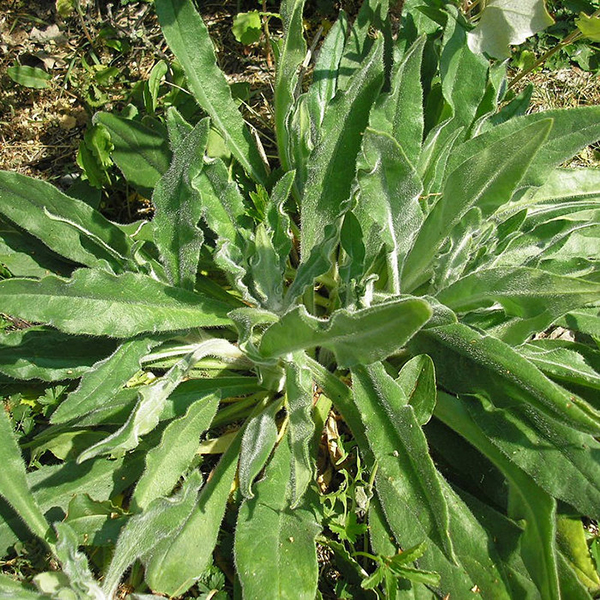
Leaves: Basal and lower leaves are stalked and lance-shaped, 6–20 cm long and 1.0–5.0 cm wide (Douglas et al. 1998). The stem leaves become gradually smaller upward and lack stalks. The leaves are succulent and covered with stiff hairs
Stems: Plants often have several stems and grow 30–80 cm tall. The angular stems are covered with spreading hairs.
Roots: Long taproot.
IMPACT:
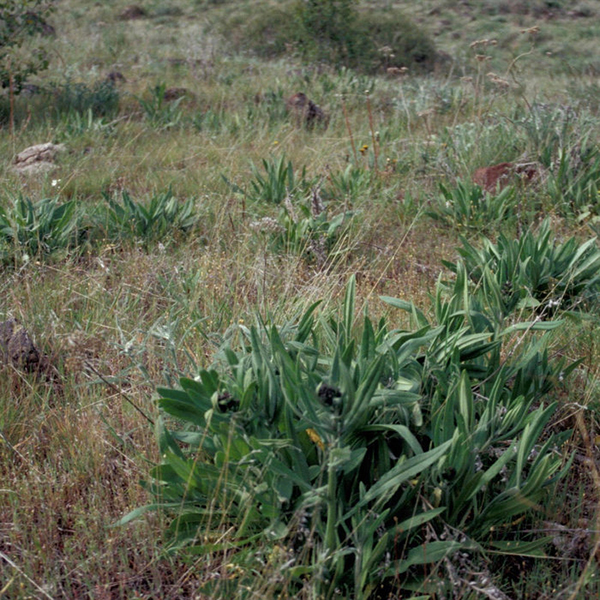 Agricultural: This plant invades pastures and hay lands, where it reduces carrying capacity and yield. It causes spoilage in baled alfalfa hay because the succulent leaves and stems become mouldy.
Ecological: Invades rangelands and disturbed areas where competing vegetation is sparse and can form dense monocultures that often outcompete native plants.
MANAGEMENT:
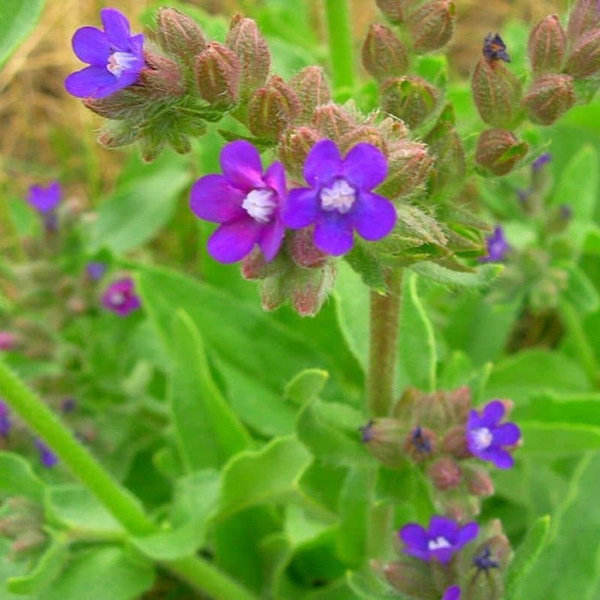 Mechanical: Small populations could be hand-pulled. Pulling is easier in young plants before the deep taproot has developed. Cutting or mowing before plants flower will prevent seed production.
Herbicides: No specific recommendations. Consult the most recent edition of BC Ministry of Agriculture, Food and Fisheries Crop Production Guides for specific recommendations. Before applying herbicides, read the label for full use and precautionary instructions.
Cultural/Preventive: Monitor disturbed sites, especially on sandy or gravelly areas, for new outbreaks. Inspect purchased hays and monitor stock feeding areas. Remove any new infestations immediately by pulling or cutting, and destroy any flowering stalks. Clean equipment, vehicles, and footwear before leaving an infested area. Maintaining a strong population of native perennials is the best way to prevent the establishment of Common bugloss.
East Kootenay Invasive Species Council photos
 The East Kootenay Invasive Species Council works to minimize the threat of invasive species that impact the environment, the economy and human health in the East Kootenay region of B.C., and we couldn’t do it without you! as a non-profit, we rely on grant funding and the generous support of our community to operate. Your donation will help us continue to protect the East Kootenay from invasive species. Donate here.