Home »
Avoid unnecessary travel near wildfires, drivers urged
If you have to go, have a safety plan, says Road Safety at Work
Wildfires and the smoke they create can add to the dangers of driving, cautions Road Safety at Work.
“Intense heat, smoke, and debris on the road can affect driving conditions,” said Trace Acres, Program Director for Road Safety at Work. “If you don’t need to drive through wildfire conditions, don’t.”
Inhaling smoke-filled air can harm your respiratory health and make you tired. Smoke can irritate your eyes, impairing your vision.
For the hundreds of thousands of British Columbians who drive for work, rapidly changing wildfire conditions add another layer of risk. Employers need to plan for those risks just as they would for any other workplace hazard.
“The best way to keep workers safe from wildfire smoke is to limit exposure,” said Todd McDonald, head of Prevention Services at WorkSafeBC. “During wildfire season, employers need to monitor conditions and be prepared to change schedules or postpone travel when risks increase.
“Employers should also understand the individual needs of workers, such as pre-existing medical conditions that could be aggravated by wildfire smoke, and plan work accordingly.”
Whether you’re driving for work or pleasure, remember that wildfire situations can change quickly. Road closures, evacuation orders, and changing fire conditions can turn a routine trip into a dangerous one.
“Emergency crews need to get to fire scenes quickly,” Acres said. “They can’t be delayed by unnecessary traffic on response routes.”
If you have to drive, “know before you go,” he adds. Check DriveBC.ca for updated information on road conditions and weather apps or reports for weather conditions. Follow instructions from emergency and traffic control personnel. Plan your trip to include checking in with someone along the way to report your latest location.
Other tips from Road Safety at Work for driving around wildfires:
- Drive cautiously.
- Don’t speed. Be alert. Increase your following distance to four to six seconds. Keep your headlights and tail lights on. Visibility often worsens in valleys or dips where there’s a creek, lake, or other water source.
- Close windows, air vents.
- Roll up windows and shut exterior air vents to keep smoke out. Use the recirculation mode on your air conditioning every hour for about 15 minutes to allow the air filter to remove contaminants and let fresh air in.
- Keep an emergency kit in your vehicle.
Stock emergency essentials such as booster cables, bottled water, a “Help/OK” sign, and a map in case you lose cell reception. Pack a few N95 masks in case you need to get out of your vehicle in a smoky area. Make sure your phone is charged in case you need to call for assistance.
“It’s also important for employers to understand that their road safety responsibilities don’t pause during emergencies,” Acres said.
Employers need to take steps to reduce driving risks whether employees are using a company-owned vehicle or their own. Whenever employees drive for work purposes, even if it’s only an occasional trip to see a client, the vehicle is considered a workplace.
For more tips on safe driving around wildfires, visit RoadSafetyatWork.ca.
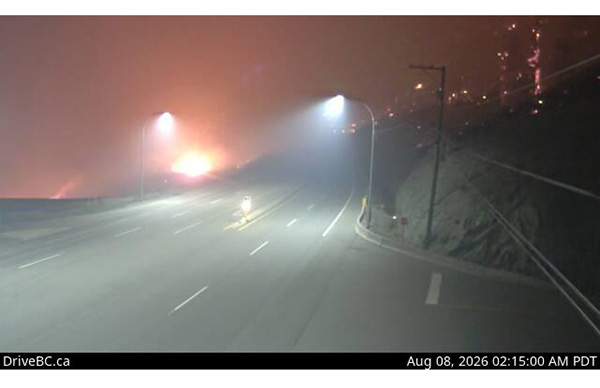
Lead image: Highway 97 at Callan Road, about six km north of Summerland and 15 km south of Peachland, looking south. This highway is currently closed due to the massive wildfire threatening Summerland today. DriveBC image
e-KNOW file photo
Road Safety at Work