Home »
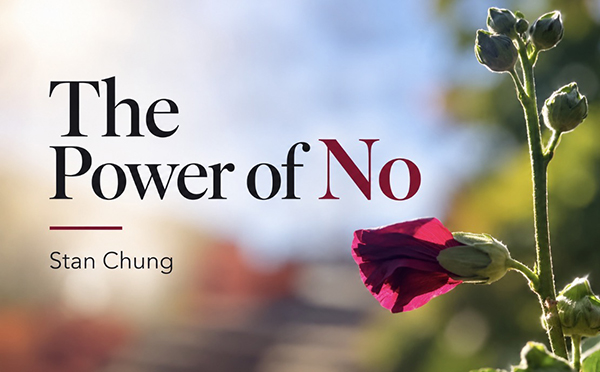
The Power of No
By Stan Chung
Op-Ed Commentary
 NO can change a relationship in a few seconds.
“No, I won’t. No, I can’t. No, I don’t want that.”
The silence afterward can be terrible.
We talk about boundaries as though they are calm things. But saying no to someone we care about can make the heart race.
At work it can change how we are seen. In a family it can disturb arrangements that have lasted decades.
Sometimes no really does cost us something. Someone gets angry. An opportunity disappears. A relationship changes.
Most of us could say no perfectly well when we were two. Then we learned what it could cost.
“Can you do one more thing? “Yes.”
“Are you okay with this?” “Sure.”
“Do you mind?” “No, it’s fine.”
Except it isn’t.
People pleasing can look like kindness from the outside. Sometimes it is fear with good manners.
I know this. I have said yes because I wanted to help. I have also said yes because I wanted to be liked, because conflict frightened me, or because being needed felt pretty good.
The price comes later.
Leanne Betasamosake Simpson’s writing on Indigenous refusal has helped me think differently about NO.
Refusal does not end with the person who refuses. It can protect a way of knowing and living that the world is asking us to surrender. She writes of Anishinaabe people who “got up and collaboratively made life.”
A refusal can make room for something that does not yet exist.
I am trying to learn to say: “No, I can’t do that.”
“I understand that you’re disappointed. My answer is still no.”
“I need time before I answer.”
“I love you. I can’t give you what you’re asking for.”
These words guarantee nothing. Someone we love may still be hurt.
Know this: The pain of saying no does not necessarily mean the answer should have been yes.
But the hardest no may be the one nobody else hears.
No, you don’t have to answer tonight.
No, you don’t need to make them understand.
No, being needed is not the same as being useful.
I am less skilled at these sentences.
What if saying no to myself is not simply about protecting my time? What if it protects a way of living I have barely learned how to inhabit?
Tricia Hersey argues in Rest Is Resistance that rest can refuse a culture that measures us by our productivity and open space to imagine another way of living.
I have spent much of my life thinking of no as the end of a possibility. I am beginning to wonder whether some of our most important refusals are how another possibility begins.
At sixty plus, an afternoon has become more visible as an afternoon. The light is moving across the kitchen. I am at my laptop. My wife is there.
“Do you want to go for a walk around the lake?”
“Yes,” I say. “I just have to finish something.”
“You always have to finish something.”
She knows me.
“Five minutes?” I ask.
She looks at me.
“Yes or no?”
I close the laptop.
“Yes.”
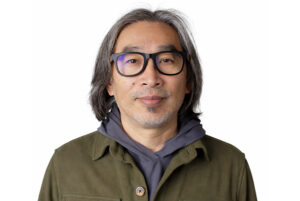
– Cranbrook resident Stan Chung, PhD is a writer, speaker, and Governor General’s laureate.