Home »
Canada’s deepest cave near Fernie found to go deeper
Royal Canadian Geographical Society’s Expedition of the Year extends Bisaro Anima to 10.5 kilometres and links another entrance
Beneath a mountain plateau 12 kilometres north of Fernie, explorers have pushed Canada’s deepest known cave farther into the mountain.
Preliminary results from a two-week expedition in late September and early October put Bisaro Anima at 10.5 kilometres long and 690 metres deep, breaking the previous depth record of 682 metres.
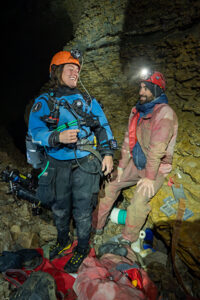
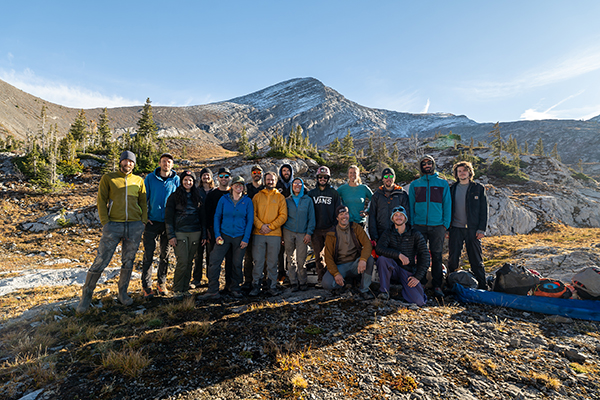
Led by Golden resident Katie Graham, the 24-member expedition added approximately 1.1 kilometres of mapped passage, connected a new entrance and extended the cave’s northern limit. The work builds on more than a decade of exploration by the team.
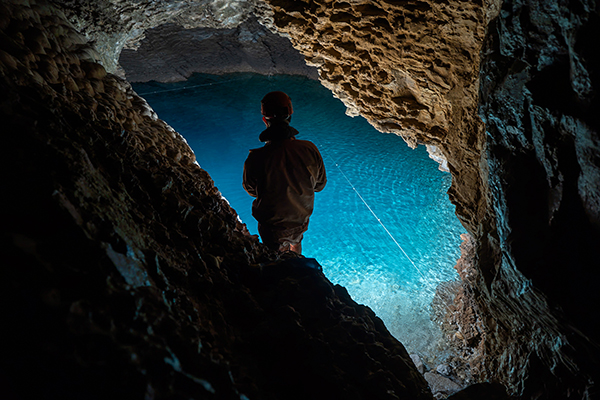
Reaching the unknown takes months of preparation, followed by hauling equipment through narrow, muddy passages, descending vertical drops and living in cold, wet underground camps. For Graham and her dive team, it meant carrying twelve bags of equipment to an underground lake (called a “sump” in caving terms).
“Most of the crew had never seen the sump before. Their faces lit up with the beauty and intimidation of the teal blue lake.” Graham says of the crew’s arrival. “The task is daunting but exhilarating. Unraveling the mystery of what is around the corner? Why is the rock like that? It is a combination of time travel, geology field trip, climbing a mountain peak, and camping in the rain- all so we can dive to know the secrets the mountain is hiding.”
The submerged passage continued beyond the divers’ turnaround point, and exploring farther will require a new plan for transporting sufficient diving equipment through the demanding cave system. Advances do help with exploration, this year for the first time, specialized radios allowed messages to pass through rock between underground camps, helping the team exchange progress reports and coordinate logistics.
The discoveries also open scientific questions. University of Toronto researchers will analyze mineral samples to investigate the age of the deepest passages, and water samples destined for the University of Montreal will support research into cave microbes and the communities they form.
The expedition follows the first UNESCO International Day of Caves and Karst, observed on September 13, 2026, just before the expedition began. The designation recognizes the importance of these often-hidden environments to water supplies, distinctive wildlife and the preservation of geological and human history.
The Royal Canadian Geographical Society (RCGS) helped fund the expedition and named Bisaro Anima its 2026 Expedition of the Year, underscoring the cave’s mystery and appeal – characteristics that were also featured in the multi-award-winning documentary Subterranean which followed past expeditions in the cave.
Support from RCGS came alongside funding from the National Speleological Society, offsetting the otherwise self-funded expedition by Graham and her teammates.
This year’s results add another chapter, with further passages still waiting to be explored. As team member Christian Stenner put it: “the results are a record of what we’ve learned so far, not the limit of what is there. There’s so much more to discover.”
Lead image: The daunting and alluring sump at the bottom of Bisaro Anima. Photo credit: Alex Cantrell/ Photos submitted
Royal Canadian Geographical Society