Home »

Not all legal tires perform the same
Road Safety at Work’s Winter Driving Safety campaign launches, urging drivers to choose tires suited to the conditions they face
As B.C.’s winter tire requirements took effect October 1, Road Safety at Work is launching its Winter Driving Safety campaign with a recommendation for drivers: Look beyond the minimum legal standard when choosing your tires.
Both M+S and three-peaked mountain and snowflake tires comply with the law, but they don’t provide the same level of cold weather performance, said Trace Acres, Program Director for Road Safety at Work.
“Winter tires aren’t just for snow,” he says. “They give you more grip and control when temperatures drop below 7C, which can happen long before the first snowfall.”
For passenger vehicles and light trucks, the law requires winter-rated tires on designated routes. They need to display either the M+S marking or the three-peaked mountain and snowflake symbol.
Meeting the legal requirements is only a starting point for safety, Acres says.
“Drivers also need to think about where they travel, the temperatures they will encounter, and the kind of winter conditions they’re likely to face. Choose tires for those conditions, not simply to meet the minimum requirement.”
Tires with three-peaked symbol recommended
Road Safety at Work recommends using winter tires with the three-peaked mountain and snowflake symbol. They’re engineered to remain flexible in cold temperatures and provide stronger grip for braking and cornering on cold, wet, snowy, or icy roads.
In poor conditions, they can reduce stopping distance by up to 33 percent compared with other tires.
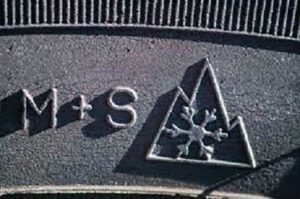 Tires with the M+S (mud and snow) marking also meet the minimum legal requirement. But they’re intended for milder conditions such as rain, slush, or snow that melts quickly. And when temperatures drop below 7C, they can lose grip and traction.
Check tires before putting them on
If you already own winter tires, inspect them before installation.
Start with tread depth. The legal minimum is at least 3.5 mm. “Again, don’t settle for the minimum when it comes to your safety,” Acres says. Road Safety at Work recommends at least 6.5 mm of tread so drivers have the traction needed to respond to sudden hazards.
Other things to check:
- Condition: Look for uneven wear, missing pieces of rubber, or other damage. Have worn or damaged tires inspected by a tire technician.
- Install four winter tires: Mixing winter and non‑winter tires can reduce vehicle stability and control.
- Air pressure: Cold weather can lower tire pressure, which can increase braking distance and affect steering and handling. Check pressure regularly.
Winter tires are part of workplace safety
For workers who drive as part of their job — even occasionally or in their own vehicle — tire choice is also a workplace safety issue.
Employers need to ensure vehicles used for work are maintained and equipped for the conditions employees may encounter. When employees use their own vehicles, employers should also confirm that inspection, maintenance, and safety requirements are being met.
B.C.’s winter tire law is in effect through March 31 on many highways, and until April 30 on highways routed through mountain passes or high snowfall areas.
The Winter Driving Safety campaign, now in its 18th year, aims to eliminate winter-related vehicle incidents and injuries on B.C. roads.
More information on choosing and checking winter tires, and winter driving tips, is available at RoadSafetyAtWork.ca/Winter.
e-KNOW file photo
Road Safety at Work