Home »
Report focuses on water pollution in key U.S./Canada watershed
Submitted by International Joint Commission Elk-Kootenai/y Watershed Study Board
“Waters flowing across the boundary shall not be polluted on either side to the injury of health or property on the other.” — 1909 Boundary Waters Treaty between Great Britain and the United States
“Our Elders are the foundation of our efforts to ensure that each word spoken in Ktunaxa, and each story shared, carries the knowledge of our ancestors forward.” —Ktunaxa Nation
Water does not stop at the Canada–U.S. border. Neither do concerns about pollution. In the Elk-Kootenai/y watershed, a new report brings together scientific research, Indigenous knowledge and community perspectives to help answer a shared question: How can we better protect these waters?
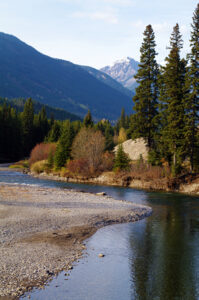
The International Elk-Kootenai/y Watershed Study Board has assembled available information about water pollution and is recommending strategies to address it. Behind that effort are millions of data points—and a commitment to listening.
Following years of discussions, the Canadian and U.S. governments formally asked the International Joint Commission (IJC) to investigate. Created under the 1909 Boundary Waters Treaty, the IJC helps address water issues shared by the two countries.
The governments developed the proposal accompanying their request in partnership with the Ktunaxa Nation. The IJC received the request in March 2024 and established the eight-member Study Board later that year. Following an upcoming public comment period in December 2026, the Study Board will submit its final report and recommendations to the IJC in early 2027.
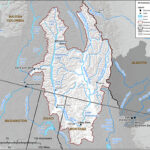
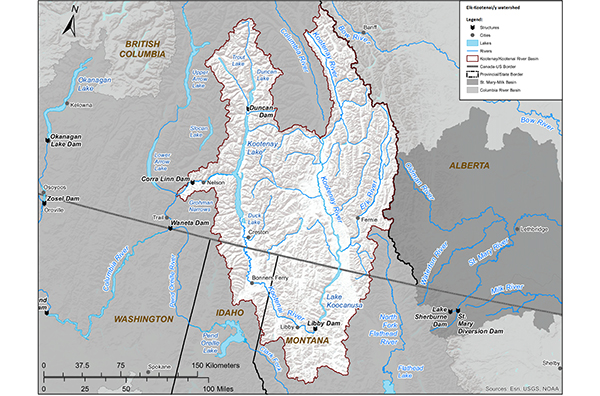
Spanning British Columbia, Idaho and Montana, the watershed covers 18,000 square miles (about 47,000 square kilometers). The entire watershed sits within ʔamakʔis Ktunaxa, the homeland of the Ktunaxa-Ksanka-Kootenai People.
Millions of data points—and local knowledge
The broader study team reviewed thousands of research papers and compiled and checked more than 10 million data points. It also gathered input from industry, government agencies, interest groups and the public. Board members visited the watershed, engaged with local communities and learned about Ktunaxa language and culture.
In interviews, three Board members described what brought them to the work: Tom Bansak, U.S. co-chair and associate director of the University of Montana Flathead Lake Biological Station; Oliver Brandes, Canadian co-chair and co-director of the University of Victoria Centre for Global Studies; and Dr. Vi Birdstone, ʔaq̓am Knowledge Holder, Ktunaxa Nation member, language speaker, mentor and researcher.
For Brandes, water offers common ground. He described a belief in people working together, listening to one another and trying new approaches, even when that work is imperfect.
Bansak emphasized the Ktunaxa Nation’s leadership in advancing the study. “It’s a big watershed with a lot of complicated jurisdictions and issues, so getting everyone to the table to work together is important.”
Dr. Birdstone was motivated by witnessing damage from resource extraction and development, and concerns about impacts far downstream. “Seeing the harm to the animals—the sheep—was shocking, and so I said yes to doing this work.”
Listening to the Land and Language
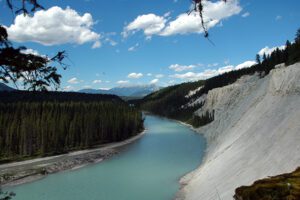
For the Ktunaxa, listening to the land, waters and stories passed down through generations is part of an ancestral responsibility to protect the earth. That understanding shaped both the study and how board members worked together.
Meeting in the watershed helped Board members connect research with the places and people behind it. Bansak said face-to-face conversations allowed the group to accomplish what would have taken countless online meetings. Dr. Birdstone noted that seeing the mine and visiting the basin was eye-opening for researchers.
A lesson in Ktunaxa, offered another way to understand the watershed. Language connects Ktunaxa culture, history and land. Dr. Birdstone described learning it as a stepping-stone into the Ktunaxa worldview.
The lesson highlighted common ground between ecology and the Ktunaxa worldview: everything is interconnected. For Brandes, understanding how language and landscape shape each other added another layer to the study.
A place for public voices
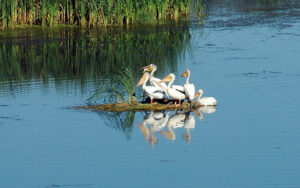
The board also listened to fishing guides, residents, Ktunaxa elders and Indigenous scholars and youth. Members reviewed hundreds of public comments, discussed them and incorporated feedback where appropriate.
“Not everyone involved reads and writes scientific papers,” Bansak said. “We’ve heard from fishing guides and others who care deeply about their home and home waters.” Those perspectives helped the Study Board build a fuller understanding of the watershed.
The Study Board plans to release its draft final report and recommendations for public review on November 30, 2026. The public comment period will remain open until January 8, 2027.
Trust
For Board members, trust made it possible to bring different kinds of knowledge together—and to approach a shared challenge with open minds.
“Building a sense of trust has been central to this whole study so that transparent, open, objective sharing could take place,” Bansak said.
Lead image: The 18,000 square-mile Elk-Kootenai/y Watershed, sprawling across the Canada-U.S. border, has been under study by the International Elk-Kootenai/y Watershed Study Board. Submitted
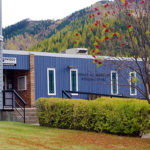
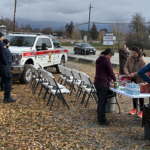
e-KNOW file photos