Home »
Seven radical ways to make a small downtown thrive
By Stan Chung
Op-Ed Commentary
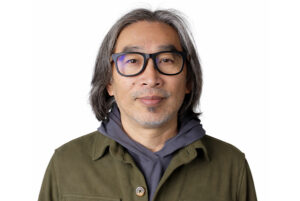 I work in Vancouver, Toronto, Calgary, and Victoria. But I choose to live in downtown Cranbrook.
I live in infill housing. I walk to medical appointments, groceries, Key City Theatre, Huckleberry Books, and Baker89. I bicycle for bread, books, yoga, sushi, or a hamburger. On summer evenings, we stroll to concerts in the park.
Sometimes, riding home with gluten-free bread in my bicycle basket, I wonder whether Cranbrook understands what it has.
But my children, 27 and 29, cannot yet imagine raising their own children here.
They see too few affordable, walkable homes and limited career opportunities. They also see extraordinary potential.
What they cannot see is how that potential becomes a life.
Perhaps we have economic development backwards.
We have treated household wellbeing as the reward of economic prosperity when it should be the foundation.
Economic development succeeds when people can both earn a living and afford a life.
Cranbrook does not lack the ingredients of prosperity. We have yet to organize them around the lives future generations should be able to afford.
Here are seven decisions that could change that.
- Stop selling the future to balance the present
Cranbrook has faced a shortage of municipally owned land suitable for childcare development.
Consider the former Tembec property. The city purchased approximately 99 acres for $3 million in 2018 and sold them for $6 million in 2020. The property subsequently became subject to foreclosure proceedings and a court-ordered sale.
The city made money and supported industrial employment. But what long-term opportunities might public ownership have preserved?
The decision: Establish a municipal land acquisition fund. Strategically acquire land for housing, childcare, employment, and public amenities. Use long-term leases where appropriate to attract investment while retaining ownership.
A profitable sale can still reduce our capacity to shape the future.
- Build households before recruiting businesses
A restaurant needs customers. A bookstore needs readers. A grocer needs families.
What if our most effective downtown business incentive were 100 additional households within walking distance?
One hundred households spending $250 monthly downtown represent $300,000 in annual purchases. They also bring workers, children, volunteers, and neighbours.
The decision: Make 10 additional occupied downtown homes an immediate target, building toward 100. Assemble land and partnerships for affordable rentals, family housing, student accommodation, and multigenerational homes.
Measure occupied homes, not just approved developments.
Our best new downtown customer might be someone who can finally afford to live next door.
- Stop asking for a school. Build a provincial opportunity.
Mount Baker Secondary School dates from 1952. Its deficiencies are documented.
But aging schools exist throughout British Columbia. Need alone will not distinguish Cranbrook’s case.
Imagine a replacement integrating trades, work integrated learning, Ktunaxa language and knowledge, arts, technology, and regional workforce development.
A great school helps families stay, employers recruit, and young people imagine futures here.
The decision: Build a costed regional investment proposal with College of the Rockies, Ktunaxa governments, trustees, educators, employers, and families.
Identify what partners can contribute and what provincial investment could accomplish.
Standing together is not writing Victoria another letter. It is building a compelling case for investment in ourselves.
- Stop making small businesses solve big technology problems alone
People increasingly ask AI where to eat, stay, shop, and find services.
Will Cranbrook businesses appear in those answers?
Digital visibility is becoming commercial infrastructure. Yet independent shopkeepers cannot reasonably master every technological change.
The decision: Help 100 local businesses improve their visibility in conventional and AI-assisted searches. Provide shared technical assistance, accurate business information, and measurable customer inquiries.
No expensive transformation. No expectation that shopkeepers become AI experts.
Make digital competitiveness a shared economic development service.
- Stop counting public amenities only as expenses
A swimming pool costs money. So does an arena. So does a theatre.
But so do roads, sewers, and airports.
Key City Theatre attracts thousands of patrons annually. Their spending and participation contribute far more than ticket revenue.
As former Chair of the BC Arts Council, I have seen how cultural infrastructure supports employment, attracts talent, and makes communities worth living in.
Recreation, libraries, and cultural facilities influence whether families stay and workers accept jobs.
The decision: Create a regional capital investment strategy measuring health, workforce retention, accessibility, tourism, and household benefits alongside operating costs. Negotiate regional cost-sharing.
Fiscal discipline tells us what facilities cost.
Civic ambition asks what becomes possible because they exist.
- Stop celebrating partnership without changing authority
The Ktunaxa flag was raised at Cranbrook’s downtown Arches in 2021.
The Ktunaxa Nation Regional Health Centre opened downtown in 2025, demonstrating Indigenous leadership and lasting investment.
But recognition is not shared decision-making.
Ktunaxa governments possess their own authority, priorities, and development ambitions.
Working alongside Ktunaxa leaders has taught me that meaningful partnership changes not merely what governments discuss, but what they have the authority and resources to accomplish.
The decision: Build on existing relationships through enduring government-to-government arrangements addressing land, infrastructure, cultural presence, and economic opportunities.
Support Ktunaxa-led investment. Respect distinct jurisdictions. Resource implementation.
Measure partnership by what governments accomplish together, not how often they meet.
- Stop planning downtown. Start delivering its future.
Cranbrook connects mining, forestry, healthcare, education, government, tourism, arts, and Indigenous enterprise.
Our problem is not a shortage of assets or ideas. It is the distance between collective ambition and implementation.
The decision: Establish a one-year downtown implementation partnership among willing governments, institutions, businesses, and property owners.
Make it the delivery mechanism for the preceding six decisions, beginning with housing commitments, a seasonal people-first street, cultural programming, and stronger visitor connections.
Assign authority, budgets, responsibilities, and deadlines.
Measure occupied homes, business activity, affordability, and public costs.
Collaboration is agreeing something should happen. Implementation is deciding who can make it happen—and doing it.
The city we haven’t quite discovered
When I was Vice-President Academic and Applied Research at College of the Rockies, we built a tremendously successful international education program.
Students came from around the world. They loved Cranbrook.
Not because we were Vancouver or Calgary.
They loved our outdoors, kindness, humility, and the way we welcomed them as neighbours.
Perhaps our isolation makes us more distinctive than we realize. Perhaps our modesty has made us reluctant to dream.
We have sometimes confused fiscal restraint with long-term stewardship and collaboration with implementation.
Cranbrook’s prosperity has always depended on our relationships. That collective strength belongs to no political ideology.
I think about my children, who cannot yet imagine raising families here, and the students who travelled halfway around the world and discovered something remarkable.
My children are not asking Cranbrook to become Vancouver or Calgary.
They are asking whether the place they love can make room for the lives they hope to build.
We already know why people love Cranbrook.
Our unfinished work is to make it possible for more of them to stay.
That would be a radical measure of prosperity.
– Stan Chung, PhD lives on Ktunaxa homelands. He is a writer, speaker, and 2026 Governor General’s laureate.