Home »
When El Niño returns, wildfire risk can rise: BC Hydro
With El Niño expected to bring hotter and drier conditions later this year, BC Hydro is encouraging customers to take steps now to prepare for a potentially longer and more challenging wildfire season.
New survey findings show that while many British Columbians feel somewhat prepared for outages, significant gaps remain in household planning and wildfire readiness.
The recent survey conducted on behalf of BC Hydro found that close to three in five British Columbians say they feel confident preparing for power outages caused by wildfires. However, that confidence does not often translate into action.
Creating an emergency plan is the area where preparedness is lowest, with 61% admitting they have not created an emergency plan for their household, and more than half (56%) do not have an emergency kit. This lack of planning is likely why nearly one‑third say they do not feel prepared to be without power during a wildfire event lasting a full day or more.
“We know wildfire season can be an uncertain and stressful time for many people, and BC Hydro is preparing by strengthening our systems and working closely with emergency partners,” said Susie Rieder, BC Hydro spokesperson. “Taking small steps now like putting together an emergency kit and making a plan for your family can help you feel more prepared if wildfire‑related power outages affect your community.”
Awareness of wildfire risk in communities across B.C. is also surprisingly limited. Forty‑two per cent of respondents do not know, or are unsure, whether their area faces elevated wildfire risk. This rises to 48% in the Lower Mainland, where wildfire risk may not be as visible as in other regions of the province.
In addition, preparedness around homes and properties remains low. Forty‑three per cent say they have not taken any steps on their property to reduce wildfire risk, though 14% say they plan to act, but have not gotten around to it.
BC Hydro prepares for wildfire season year‑round, working closely with partner agencies to monitor and manage wildfire risk. Crews receive ongoing training to ensure rapid response, while critical materials such as power poles and hardware are stocked for quick deployment.
Vegetation along and near electrical rights‑of‑way is assessed and managed annually to reduce fuel loads and limit outages caused by falling trees or branches. Preventative measures also include regular inspections of electrical equipment, the use of fire retardant on some wooden poles, and trials of new protections such as fire‑resistant steel‑mesh pole wraps coated with heat‑activated barriers.
BC Hydro reminds customers that early preparation can make a significant difference during wildfire‑related emergencies, including evacuation orders or extended outages, and it recommends the following:
- Create an emergency kit: Assemble a grab-and-go kit with essential supplies and store it in an accessible, safe location. Regularly check that all items are well-stocked and functional. PreparedBCoffers tips on the recommended contents.
- Develop an emergency plan: Share your plan with family members, ensuring everyone knows what to do in the event of an emergency.
- Power down if time allows: Unplug non-essential electrical appliances or locate and label the main electrical switch in your home ahead of time to safely turn it off if evacuation becomes necessary.
- Keep emergency contacts handy: Create a list of critical contact numbers, including fire, police, ambulance services, and BC Hydro at 1 800 BCHYDRO (1 800 224 9376).
- Be FireSmart at home: Clearing gutters, moving flammable materials away from your home, and planting wildfire‑resistant vegetation are simple actions that can help protect your home. Taken together, these small steps strengthen the safety of whole neighbourhoods. Use the FireSmart Begins With You Guideto make your property and neighbourhood FireSmart.
Customers evacuated for five days or more may qualify for a bill credit for electricity used during that time. The credit is applied automatically, there is no need to call.
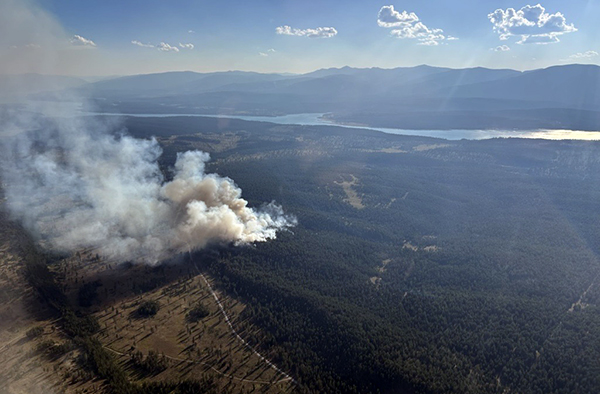
BC Wildfire Service file photo
BC Hydro