Home »
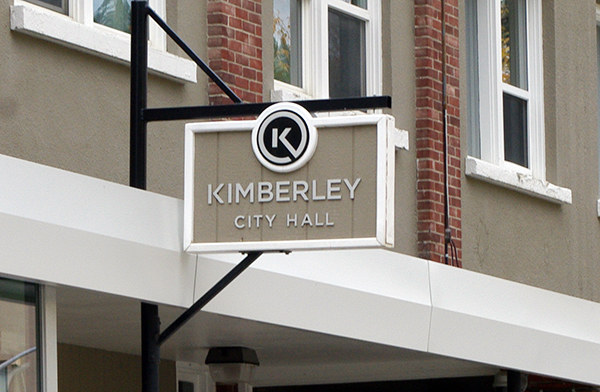
MRDT renewed as city stays as designated recipient
Kimberley City Council Report
By Nowell Berg
 On May 25, City of Kimberley council held its regular bi-monthly meeting.
Councillors Sue Cairns, Kevin Dunnebacke, Diana Fox, Woody Maguire, Jason McBain and Sandra Roberts were present along with Mayor Don McCormick.
An archive of the meeting can be viewed on the City of Kimberley YouTube channel. Watch it here.
Municipal and Regional District Tax (MRDT)
Council unanimously passed the MRDT tax Bylaw.
The MRDT is currently set at two per cent. All local accommodation providers add this as part of the cost when tourists stay at a hotel or short-term rental unit. In 2025, the MRDT collected “approximately $280,000,” according to chief administrative officer Jim Hendricks.
In April, Tourism Kimberley (TK) made a presentation to council asking that the city “renew” the current MRDT Agreement, set to expire at the end of March 2027.
The second TK ask was for council to approve an increase from two to three per cent This one per cent increase would collect approximately $50,000 to $100,000 annually in additional revenue.
The third TK ask was for the “designated recipient” to be changed from the city to TK. This provision was not accepted by the city, which will remain as the “designated recipient” for the MRDT funds.
Renewal of the MRDT allows the city to maintain its designation as a “resort municipality,” which, in turn, generates another $160,000 from Resort Municipality Initiative funding.
A package of information including the MRDT Bylaw will be forwarded to Destination BC and the Ministry of Finance for their approval of the one per cent tax increase and renewal for a five-year term that will take effect on April 1, 2027.
Kimberley Transit Update
 Troy Pollock, Manager of Planning and Sustainability, presented council with the fare changes and route expansion options for Kimberley Transit.
He said, “We’ve been trying on a couple of unsuccessful attempts to expand the Kimberley-Cranbrook Commuter (KCC) service.” He added, “Unfortunately there is no new or expanded funding for expansion of the commuter route.”
Pollock mentioned that Daynika White, BC Transit, along with the local operator, worked to “optimizing resources” such that it allows Kimberley Transit to “expand services to and from Cranbrook as well as the local on demand route 21 [health connections].”
These changes were deemed “really good news” by Pollock. There will be an “earlier” morning route added and a “later route” at the end of the day. “Instead of seven trips per day to and from Cranbrook, we will end up with eight trips per day.”
Another change will reduce the daytime health connections trips from three to two. Starting in July, the routing of the health connections bus will then stop at St. Eugene to allow ?aq’am Community members to make the trip into Cranbrook.
Other changes coming to Kimberley Transit include fare increases for single ride tickets and the creation of a “monthly pass option.” Starting in July, a single ticket increases by $0.50 to $3.50 per ticket. The newly created monthly pass will cost $80.
In 2028, another round of fare increases will push the single ticket price up another $0.50 per trip to $4 per ticket. The monthly pass will rise to $92.
Kimberley Transit will continue to provide “approximately 7,900 hours” of service per year.
Concluding, Pollack said, “Existing resources have been reallocated to better align service levels with service demand on each route.”
Kimberley city council assembles twice monthly starting at 7 p.m.
The next regular council meeting: June 8.
e-KNOW file photos
e-KNOW