Home »
Highway 36
By Peter Christensen
Op-Ed Commentary
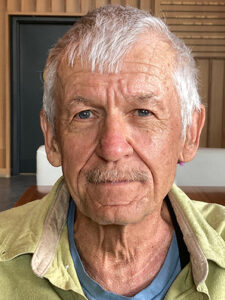 Traffic on 36 is slow, the GPS arrow straight except for correction lines and coulees, those steep-sided, flat-bottomed ravines that ravage the buffalo plains of the District of Alberta, North-West Territories. Neat rows of fledgling wheat and barley spears fill furrows, line fields that reach for the horizon, there is a low grey black dome of sky, it is raining.
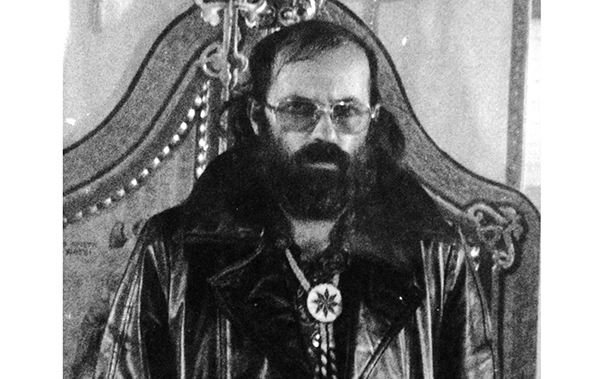
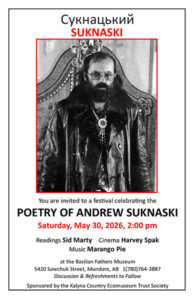
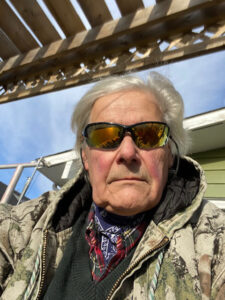
Our destination: Vegreville, then west to the small town of Mundare to attend a memorial celebrating the Poetry of Andrew Suknaski (pictured above), organized by long-time friend and filmmaker Harvey Spak. Andy’s work received national recognition in Storm Warning: The New Canadian Poets, a landmark 1971 poetry anthology edited by Canadian literary icon Al Purdy.
Held in a theatre at the Basilian Fathers Museum, a full house was moved by the wind laden images of Harvey’s film, Wood Mountain Poems, followed by a subtle, understated narrative and performance that honoured Andy’s life as fine artist, witness and poet; composed and performed by fellow poet and writer, Sid Marty. The presentations were heralded and emphasized by the music of the local band Marango Pie, a vibrant traditional Ukrainian folk music ensemble. It was a fine event!
 I knew Andy in the 1970s. He published Wood Mountain Poems in 1976; edited and endorsed by Al Purdy he gained favour with the Canada Council, Ottawa’s arbiter of Canadian culture. He lived what I naively thought was a romantic poet’s life that in reality, meant drifting from one urban ‘rat hole’ to another while writing.
Andy, from time to time worked on mountain trail crews and we hiked together with friends to fish mountain lakes. “Suknaski,” we called him. His work included concrete and sound poetry, retellings of Aboriginal myths, lyric anecdotes and fine art drawings. His dense poems, more lyrical narrative than what I been taught to think as poetry, were unlike the rhythmic end- rhyme junk of Romantic English poets.
Andy wrote about his immigrant homesteading father, who after being robbed of a meager collection of tools, carved a crude sod ‘house’ in the hillside with a knife to survive his first winter near Wood Mountain.
Andy’s stories and poems are frank open dramas. His poems imitate the crude vernacular language of a time when everyday talk was a mixture of old country language, peasant English and Indigenous expression that described a time that bled from Indian wars, colonial racism, theft and bribery, arrogant, lying Northwest Mounted Policemen, corrupt British land agents who collected multiple illegal payments from frightened immigrants fleeing Europe’s tyrannies and class wars, about men who sewed land titles and ten dollar bills to the inside of the only jacket they owned; wore it to their graves asking to be buried face down so the government men could kiss their ass.
 Harvey Spak (right), filmmaker for the National Film Board, a descendent of Ukrainian parents like Suknaski, interviewed Andy 48 years ago. He filmed the windswept grasslands and recorded earthen stories told over beer parlour tables by descendants of mixed blood, Piegan, Sioux and European at the Trails End Hotel in Wood Mountain.
Wood Mountain, Saskatchewan, was infamous as the retreat location to where Sitting Bull and his family journeyed in 1876 following the massacre of Lieutenant Colonel George Armstrong Custer’s force of 700 U.S. Cavalry at the Battle of the Little Bighorn in Montana.
After five years of starvation, Sitting Bull and 181 of his followers walked to Fort Qu’Appelle to meet Major General Sam Steele and ask for a Reservation. On the advice of the Commissioner of the North-West Mounted Police, Colonel James Macleod, Sir John A. Macdonald denied Sitting Bull and his followers a reserve.
Steele issued Sitting Bull warrants for provisions to assist them in returning to the United States. Colonel Irvine, of the police, made sure Sitting Bull did not receive the provisions he was promised, made sure Sitting Bull’s family and followers starved during their exodus journey.
There is speculation as to why Sitting Bull was denied a Reservation, some say “Canada” was concerned he would inspire uprisings, others say that he was refused as a result of pressure from the American government.
I came away from Andy’s memorial with mixed feelings. Not because of something that happened at the performance but because revisiting Andy’s poetry and struggle to be heard churned-up memories of my struggle for recognition of western themes by a national audience.
In 1981, I published Rig Talk, a book that told stories about working in the oil patch, about the impact on a culture rapidly transitioning from agrarian to industrial. It was ignored by the eastern literati. Nearly 40 years later Rig Talk is seen by a younger generation of western academics as ground breaking…
The Canadian writing scene of the 1970s and ‘80s was very different. Eastern Canadian publishers and academics jealously protected their self-appointment as cultural arbiters. Cultural entrenchment left western writer’s little choice: kowtow to central Canadian themes set in national territory and hope eastern publishers would bless your effort or go south.
Western Canadian writers like Will James, formerly Ernest Nephtali Dufault, reset his Alberta cowboy fictions in American landscapes and changed his name to attract American publishers. Andy Russell, an Alberta big game guide and outfitter found publishers through his connection with American Sportsmen and hunting clubs.
According to eastern Canadian publishers, Western Canada had no cowboy mythology or Indian wars, they believed not much went on there at all. Some fur trading and canoe paddling!
With the cultural revolution of the late twentieth century supported by industrial prosperity western identity emerged. Western literary publishers sprang up, with names like NewWest Press or Thistledown Press. The ‘eastern’ elite, try as they did to retain control of what they imagined Canadian culture should look like, lost their hold on western identity.
Over time, this awakening manifested itself in other ways: Indigenous people talked of “First Nations,” business interests directly sought world markets. Albertans, the least dependent, talked about a better deal, about Reform and separatism. They published a ‘resentment index.’ The sacred pillars of Ottawa’s colonial overreach cracked and weakened.
As we continued our ‘vacation’ journey to circumnavigate southern Alberta I wondered if we would hear open talk about separation. Rather than being needled by these notions I wondered, what is it that these independent people are saying that I can learn from. I wondered, why is there momentum behind what they are saying?
Unsurprisingly, those who benefited directly from federal employment or patronage spoke for a Canada as they knew it. Others were close-mouthed, were thinking over this Quebec size notion. Ironies bubbled to the surface. Treaty Chiefs, vocal in their criticism of “colonialism’’ for eight generations, openly accused Danielle Smith’s UCP Alberta Government of treason because Smith wants to end colonial control by Ottawa.
Flooded out of our campsite at Mundare Municipal campground, the mosquito capital of Alberta, we move to a drier location beside multiple fastball diamonds with access to newly constructed showers and washrooms, prepare for an early start on the next chapter of our journey.
All photos by Harvey Spak.