Home »
Water pollution study approaches final stage
In September 2024, a team of experts was assembled by the International Joint Commission (IJC) to conduct an analysis of water pollution in the Elk-Kootenai/y watershed and its impacts on people and species. The establishment of the International Elk-Kootenai/y Watershed Study Board (Study Board) is the result of long-standing concern stemming from both sides of the US-Canada border around the state of pollution in the watershed.
In March 2024, the Governments of Canada and the United States, in partnership with the Ktunaxa Nation, requested the IJC to appoint an independent Study Board to compile, review and analyze existing data, knowledge and information in the watershed.
The IJC is an international body that has existed for over 115 years to assist the federal governments in preventing and resolving transboundary water disputes along the shared border.
“As a resident of this watershed, I am relieved that this study is bringing together the experts, data and knowledge required to understand pollution in the river system,” said Stella Swanson, member of the Study Board located in Fernie. “There have been questions and concerns about the health of the watershed for years. People want to understand where pollutants are coming from and how it is affecting the surrounding environment.”
This request from the federal governments (called a “Reference”) is the first in the history of the IJC that was developed in partnership with an Indigenous Nation. The watershed sits within ʔamakʔis Ktunaxa, the territory of the Ktunaxa Nation and other Indigenous Peoples.
It also crosses the international border, and is shared between the province of British Columbia, the states of Montana and Idaho, and six Ktunaxa communities: Kootenai Tribe of Idaho, Confederated Salish and Kootenai Tribes, Yaq̓it ʔa·knuqⱡiʾit, ʔa·kisq̓nuk, ʔaq̓am, and Yaqan nuʔkiy.
Given the nature of the reference, the Study Board is comprised of US, Canadian and Indigenous board members. The study’s objective is to develop an understanding of what pollutants are present in the watershed, where they are coming from, and identify any trends and how they affect both ecosystems and people. The Study Board is set to deliver a final report and recommendations to the IJC in December 2026, following the recent announcement of an extension.
The Study Board’s Mandate
Rather than conducting new research or data collection, the Study’s central task is to analyze, synthesize and assess existing data. Over decades, governments, researchers, industry and communities have collected large volumes of information, but much of it has remained fragmented. Guided by transparency, open communication, good faith, accountability, timeliness, respect, inclusivity, collaboration, and cooperation, the Study Board has engaged with federal, provincial, state, and Indigenous governments, industry, local communities, organizations, the public, and any interested stakeholders to gather existing data.
The Study Board has convened four Technical Working Groups, each made up of subject‑matter experts in their respective fields, to compile and synthesize this vast pool of information. These groups are tasked with conducting an objective review of available data, identifying patterns and gaps, and assessing what is known and not known about pollution and its effects on ʔa·kxamis qapi qapsin (all living things) within the watershed.
The Technical Working Groups are investigating the following themes:
Water Quality Status and Trends;
Ecosystem Health and Cumulative Effects;
Impacts to Human Health and Well-being;
Mitigation.
This approach recognizes that understanding water pollution requires multiple lenses, from chemistry and biology to human health and ecological risk; as well as the different world views of Indigenous Peoples’ Knowledge and Western Science.
“We understand that this isn’t simply an academic exercise,” said US Study Board co-chair, Tom Bansak. “For communities in the watershed, including Indigenous Nations and rural towns that rely on the watershed for drinking water, food, cultural uses, recreation, and livelihoods, the stakes are high. The legacy of our work will be the amalgamation and interpretation of the data in the watershed to form a picture of where the issues are and their downstream effects.”
In addition to the support of technical experts, the Study Board is bolstered by a Public Advisory Group, Industry Advisory Group, and Council of Governments Advisory Group that provide input at stages throughout the study process.
The Study Board also relies on the guidance of a Council of Ktunaxa and Ksanka Knowledge Holders to integrate Indigenous Knowledge, science and ways of knowing into all aspects of the Study. The Council informs the approach the Study Board has taken on data sovereignty and governance in support of respectful and reciprocal evaluation of information about water pollution in the study area. The Study has also benefited from the contributions of Indigenous scholars on the Technical Working Groups.
From data to decisions
The study’s focus is not to resolve all the issues in this transboundary watershed. Rather, its goal is a consolidated body of knowledge that can support future action by the governments with jurisdictional authority. By assembling and evaluating existing data, the Study aims to provide evidence-based recommendations to the IJC. The IJC will then use this information as a basis to advise governments and drive next steps in managing the watershed.
In parallel with the establishment of the Study Board, in 2024 a Governance Body comprised of the 11 governments named in the Reference was also created, with the IJC serving as secretariat. The Governance Body is a collaborative forum intended to enable more timely action to reduce and mitigate the impacts of water pollution in the watershed.
The recommendations from the Study Board are expected to inform policy discussions, regulatory decisions and future research and monitoring on both sides of the border. Upon the completion of the study, the Governance Body will consider its findings and develop an action plan to address pollution in the watershed.
Study in the homestretch
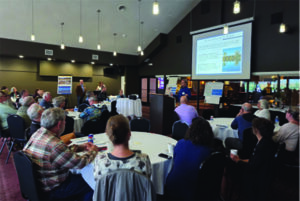
With only a few months until it must deliver its final report to the IJC, the Study Board is currently reviewing results from the Technical Working Groups. The Study Board will prepare a draft report to release in September 2026 for public consultation. The study has benefited from extensive public input throughout the process, and the board is keen to meet with the public again this fall both in person and online to receive feedback on its major findings and recommendations.
Public confidence in the results of this study is paramount to its success. “Trust in shared information and data is essential to developing a plan to mitigate the impacts of pollution in the watershed,” said Oliver Brandes, Canadian co-chair. “It is critical for effective cross border governance.”
“Our work is about connecting knowledge across borders, disciplines and worldviews,” adds Clayton Matt, Study Board member and citizen of the Confederated Salish and Kootenai Tribes. “The work we are doing today will help everyone in the watershed better understand how pollution is shaping the future of this shared river system.”
The Study Board will continue to engage with local organizations, governments and the public in the coming months. Stay up to date on study board activities and upcoming public consultations at www.ijc.org/ekwsb.
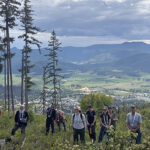
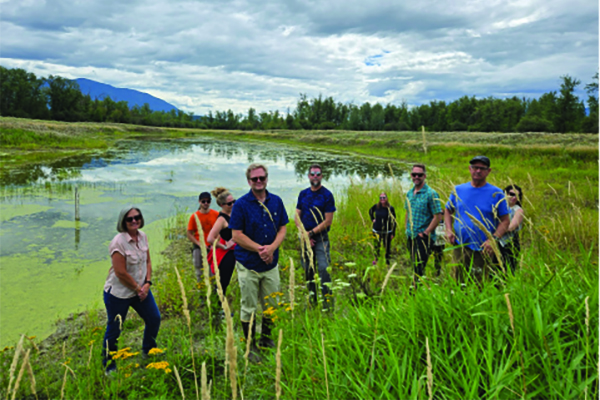
Lead image: The Study Board visits Yaqan Nukiy wetland restoration site on tributary to Kootenai/y River.International Elk-Kootenai/y Watershed Study Board photos
International Elk-Kootenai/y Watershed Study Board