Home »
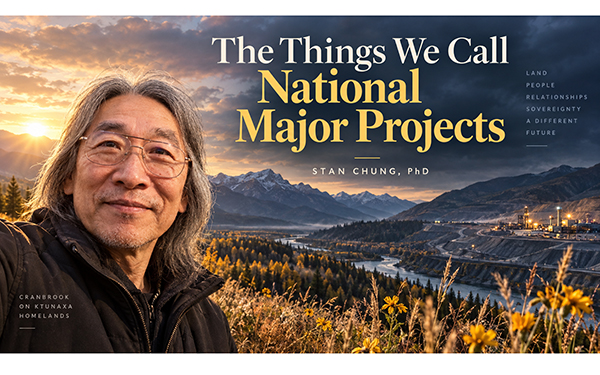
The things we call national major projects
By Stan Chung
Op-Ed Commentary
One of the wisest friends I know, Pete Sanchez, lives at ʔaq̓am. The Ktunaxa knowledge holder is worried.
So am I.
I am past 60. For most of my life, I believed the world was getting better.
I had reasons. Children survived diseases that once killed them. People lived longer. Fewer people lived in extreme poverty. Rights expanded. Goods crossed borders.
I dreamed of a world where these gains kept adding up.
I imagined trade would make war trickier. Shared prosperity would make us safer. The internet would connect us.
I knew the story was incomplete. I have spent much of my life in classrooms, boardrooms and Indigenous communities. I have watched a new road, mine or government program be called progress by one person and loss by another.
Still, I believed, you know, in the better direction.
 Now the world seems to have cracked.
I live in Cranbrook in the East Kootenay. In spring, purple crocuses push through faded grass. In October, larch turn gold against the Rockies.
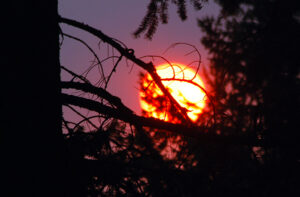
But winter ice barely seems to last long enough for lake skating anymore. I have spent weeks in July and August inside because wildfire smoke filled the valley. I have watched the Rockies disappear behind the grey and the noon sun glow orange.
My daughter Clementine is 27 and lives up the road in Kimberley.
“Do you think the world is getting worse?” I ask her.
“Worse than what?”
“Than when I was your age.”
She looks at me.
“For who?”
I don’t answer.
Memory distorts. Nostalgia can turn childhood into evidence. At my age, I have to be careful not to confuse my own aging with the world’s decline.
But Pete is worried.
Countries order missiles and artillery like pizza. Governments are stockpiling minerals, building battery plants and semiconductor factories, protecting ports and power grids. Canada wants pipelines, mines and supply chains that cannot be shut down by another country.
We call this strategic investment.
Strategic used to make me think of wargames and warships. Now the word joins lithium, copper, electricity, computer chips, ports and rail lines.
It has come to mean something quite different.
Sovereignty. Self-determination. Survival.
When I was a boy in Maryfield, SK, I imagined Russian paratroopers landing on the fields. It was the Cold War, but people said, don’t be silly. Nobody wants to invade the Great White North.
But Canada has rediscovered a simple fact. If another country controls the fuel, minerals, medicine or computer chips you need, it can sure as heck limit your choices.
There is a hard irony here for Indigenous people.
When Canada talks about its sovereignty, it wants control of mines, pipelines, ports, power lines and technology.
When governments talk about Indigenous sovereignty, I hear different nouns.
Jobs. Contracts. Shares in projects.
And different verbs. Consult. Partner. Participate.
I have sat at enough tables to know it is “own or be owned.” A paycheque sure matters. Own-source revenue matters. A nation owning part of a project matters even more.
But none is the same as deciding what happens to your land.
There is something else I have been slow to understand.
I am not sure the word “asset” means the same thing if you were born Indigenous.
I use the word constantly. I chair boards. I read balance sheets. Trees become timber. Rock becomes ore. Falling water becomes megawatts. Land becomes a dollar figure.
The word asset makes each thing easier to count.
It also makes each thing a thing.
My friend Ktunaxa poet Smokii Sumac lives near water 20 minutes away from me. They tell me colonization is essentially fractured relationships.
Between us and water. Between us and the land. Trees. Animals. Stars. Ourselves.
Broken relationships.
I had thought about colonization partly through things taken; acres of land, timber, minerals, political authority.
Smokii is talking about something broken.
How is that different from something taken?
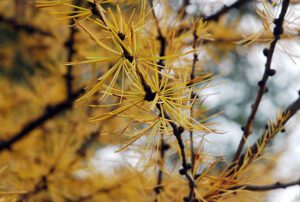 Walk into an East Kootenay forest. There are lodgepole pine, larch, bunchgrass, soil, creek water, fungi, beetles, birds and elk. Fire moves through it. Snow sits there in January and becomes water in May.
A timber cruise can count the trees.
It cannot count the forest.
The larch can still turn gold while the relationships underneath the colour disappear.
Ktunaxa knowledge holder Kyle Shottanana was born at Yaq̓it ʔa·knuqⱡi ‘it and now lives at ʔaq̓am.
“Running water is a ceremony,” he tells me.
I stop at that.
At home I turn a chrome handle. Water falls into a metal sink. I drink it, wash a plate, brush my teeth and watch it disappear down a pipe.
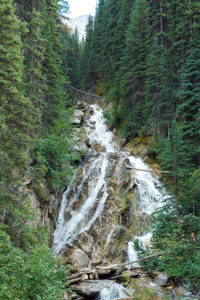 To me, running water is plumbing.
Kyle calls it ceremony.
Same water. Different relationship.
One evening my wife whispers, “It’s so quiet.”
We listen.
“Birds,” I say.
She nods. “I wonder where they are.”
One quiet evening proves nothing. I know that.
But we both noticed what we couldn’t hear.
Meanwhile Canada is racing to secure strategic assets: copper, lithium, uranium, oil, electricity, computer chips, ports and railways.
The logic is easy to understand. Control the scarce thing and nobody can use it against you.
Chris Luke, Sr. a Ktunaxa elder to the south of us in yaqan nukiy, says a watershed doesn’t work that way.
You can own a dam. You can own the turbines. You can sell the electricity.
You cannot own cold water, spawning fish, snowpack, cottonwoods, insects and everything else that has to keep working together for the river to remain a river.
That is what troubles me about the word asset.
The word takes a relationship and draws a box around one part of it.
Then we argue about who owns the box.
Indigenous ownership matters. Jobs matter. Equity matters. But an Indigenous Nation owning shares in a coal mine does not by itself change its relationship with the mountain, the creek or the coal.
Elder Alfred Joseph in ʔakisq̓nuk laughs when we talk about things like this.
“It’s so funny I’m ready to cry,” he says.
I know the feeling.
Governments fear dependence. So they want more minerals. More oil. More electricity. More computer chips. More control.
We hope these things will make us safe.
But I keep looking outside.
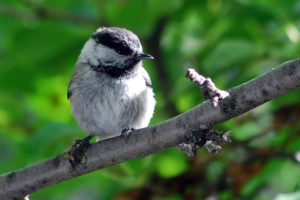 A crocus pushing through cold dirt. Snow melting into Joseph Creek. A larch turning gold. A chickadee’s song I remember hearing more often.
These aren’t decorations around the economy.
They are part of what makes an economy possible.
I have to be careful. I believed in much of the story I am questioning.
I guess I still do.
Antibiotics save lives. Trade puts food on shelves in February. A video call lets me see someone thousands of kilometres away.
I don’t want to replace a simple story of progress with my simple fears of collapse.
My Ktunaxa friend Pete Sanchez is worried.
So am I.
Canada has rediscovered that dependence can be dangerous. So we are buying mines, building pipelines, protecting power lines and securing data centres.
I understand the fear. Maybe I share it.
But I keep hearing Smokii’s words: colonization is fractured relationships.
I think about Kyle calling running water a ceremony. My wife listening for birds. The summers when smoke erased the Rockies.
I dreamed of a world that kept getting better.
I imagined we would know what better looked like.
I am less sure now.
Maybe the question isn’t what national major projects we need to secure for the future.
Maybe it is what we are losing while we secure them.
– Stan Chung, PhD, lives on Ktunaxa homelands. Stan is a writer, speaker, strategic advisor, and 2026 Governor General’s laureate.