Home »
A city worth growing older in
By Stan Chung
Op-Ed Commentary
 Every community says it wants people to age in place. The better question is whether it has built a place worth growing older in.
Most discussions begin with housing and health care. Both matter, but neither is enough to explain why some communities remain vibrant as people age while others slowly become harder to live in.
The communities that thrive understand something larger: aging well is not simply a health issue.
Aging well is an economic development strategy.
Across the greater Cranbrook area, the number of residents aged 65 and older nearly doubled between 2001 and 2021, rising from 3,165 to 6,390.
Today, nearly one in four residents in the Cranbrook census agglomeration is 65 or older.
A good older life depends on ordinary things.
Safe sidewalks, places to rest, nearby recreation, a concert on a Thursday evening, a trail to walk with a friend, a public washroom downtown, and the confidence that leaving home will be enjoyable rather than exhausting all influence whether someone stays engaged with the community.
These everyday experiences shape health long before anyone arrives at a doctor’s office.
They also shape local economies.
A city that is good to grow older in becomes attractive to everyone.
It works better for grandparents, children, parents pushing strollers, visitors discovering the community, and people recovering from illness or injury.
Retirees bring stable income, volunteer time, family visits, local spending, philanthropy, and experience that strengthens civic life.
They also help sustain theatres, trails, pools, libraries, cafés, local shops, and community organizations.
These are not soft benefits. They are part of how a city attracts and keeps people.
We often describe aging as a seniors’ issue. In reality, it quickly becomes a family issue and an economic issue.
When an older adult loses independence, responsibility rarely disappears. A spouse becomes a caregiver, adult children reorganize their work schedules, grandchildren see less of their grandparents, and neighbours quietly fill gaps that formal systems no longer meet.
The costs continue to spread.
Employers lose workers for appointments and caregiving, health services respond to preventable crises, and families absorb responsibilities they never expected to carry.
The community has not reduced the cost. It has changed who pays.
You can see the pattern across community life.
When dementia supports for caregivers are reduced, families step in. When parents cannot find pediatric specialists close to home, travel becomes part of treatment.
When neighbourhoods become harder to walk, everyday exercise gradually disappears and isolation grows.
None of these decisions seem connected at first. Together they determine whether people remain healthy, independent, and connected for another year—or another decade.
Cranbrook already has important strengths. The Key City Theatre creates reasons for people to gather throughout the year. Rails-to-Trails has become part of everyday life while attracting visitors from across the region.
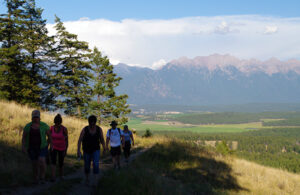 The Aquatic Centre and Western Financial Place bring people together through recreation, sport, and community events.
The Community Forest offers something equally valuable: easy access to nature, fresh air, and quiet places where people of every generation can walk, reflect, and reconnect.
These are not simply recreational amenities.
They are economic development assets because they make Cranbrook more livable, more visitable, and more likely to retain people who have choices.
The next step is to think less about individual projects and more about the experience of growing older in Cranbrook.
Can someone spend a morning downtown comfortably? Can they move easily between neighbourhoods?
Can they remain active without relying on a car for every outing?
Can families find the services they need close to home?
Communities that answer those questions well strengthen far more than the lives of older adults.
They support family life, local business, health care, tourism, volunteerism, and the decisions people make when they ask whether this is where they want to build a life—or spend the next stage of it.
Every community eventually invests in aging.
Some invest before independence is lost, while others spend much more after families have already absorbed the burden.
That is the economics of dignity.
Cranbrook should not think of aging only as a cost pressure.
Aging well may be one of its strongest economic development opportunities.
A city worth growing older in is also a city where families are more likely to flourish, neighbours are more likely to know one another, children and grandparents share the same parks and trails, and people of every generation have reasons to step outside their front door.
e-KNOW file photos
– Stan Chung, PhD, lives in Cranbrook. He is a writer, strategic advisor, speaker, and a 2026 Governor General’s laureate.