Home »

Journey to school and back riskiest part of a student’s day
By ICBC
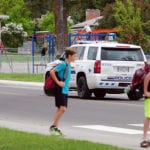
For many children, getting to and from school is the riskiest part of their day. In the Southern Interior, 39 children walking or cycling are injured in crashes every year.
ICBC data shows minors are more than twice as likely to be involved in a crash during the morning and afternoon school commute periods than other times of day.
The risk is even greater in September, when crashes involving minors are 37% higher than the monthly average.

This September, our road safety team is partnering with Speed Watch volunteers and police at schools throughout B.C., to monitor drivers’ speeds and remind everyone that school zone limits are back in place to keep kids safe.
“As students head back to classrooms throughout B.C., keeping them safe on their journeys to and from school is a shared responsibility,” said Lisa Beare, Minister of Education and Child Care. “Whether children are walking, cycling, taking the bus, or being dropped off, we all play a role in creating safer school communities. By staying alert, obeying school zone speed limits, and modelling safe road behaviours, drivers can help ensure every student gets to school and back home safely each day.”
“The walk to school is often a child’s first step towards independence, and it should be a safe one,” said Niki Sharma, Attorney General. “Working with ICBC and local communities, we’re making the streets around schools safer for children, one crossing at a time. This is part of our work to build safer communities for families in B.C.’s biggest cities and smallest towns.”
“The return to school means more children and families will be travelling on our roads, often during busy morning and afternoon commutes,” said Kathleen Nadalin, ICBC road safety manager. “Children can be unpredictable around traffic, which is why drivers need to slow down, eliminate distractions, and be especially cautious near schools and playgrounds. School zone speed limits are in place to protect our most vulnerable road users, and every driver has a responsibility to help keep students safe throughout the entire school year.”
Parents and caregivers are encouraged to give children a road safety refresher before the school year begins. If your child will be walking or cycling to school, take time to practice the safe route together. This is a great opportunity to offer guidance and encouragement along the way, while making sure they have the skills they need to travel safely.
We’re proud to invest in making our neighbourhoods safer for kids and families. Since 2001, we’ve dedicated over $1.5 million to 88 school safety projects throughout B.C. Last year alone, we completed 10 projects totaling $271,000. These improvements, such as pedestrian signals, flashing beacons, raised medians, refuge islands, speed reader boards, and speed humps, are all designed with our communities in mind to help protect students and everyone near schools.
ICBC safety tips for drivers, parents and caregivers
Tips for drivers:
 Every school day, unless otherwise posted, a 30 km/h speed limit is in effect in school zones from 8 a.m. to 5 p.m. In playground zones, a 30 km/h speed limit is in effect every day from dawn to dusk.
Watch for school buses. When their lights are flashing, vehicles approaching both directions must stop.
If a vehicle stops in front or next to you, they may be yielding to a pedestrian, so proceed with caution and be prepared to stop.
Avoid distractions by leaving your phone alone while driving and watch for children walking, cycling or riding a scooter. Distracted and inattentive driving is a leading cause of crashes with pedestrians and cyclists.
Before getting into your vehicle, walk around it to make sure there are no small children hidden from your view. Always look for pedestrians when backing up.
You can help pedestrians see you better by making sure that your headlights, brake and turn indicator lights are clear, visible and always in good working condition.
In residential areas, look for signs of kids playing such as a nearby ball or hockey net. Slow down and watch for children as they could run into the street at any moment.
Tips for parents and caregivers:
If you drop off your child in a school zone, they should exit the car on the side closest to the sidewalk. Don’t stop in a no parking or no stopping area or block a crosswalk, as this can prevent drivers from seeing children as they’re walking and put their safety at risk.
Teach your child the basics of crossing the street:
 Stop at the curb or edge of the road.
Look left and right for oncoming vehicles, then look left over your shoulder for vehicles that might be turning.
Make sure all vehicles have stopped before entering the road. Make eye contact with drivers before crossing, even if the walk signal is on.
When the intersection is clear, start crossing and keep looking for approaching vehicles.
Teach your child to walk on the inside edge of the sidewalk away from the road, so they’re further away from traffic. If there isn’t a sidewalk, they can walk facing oncoming traffic, so they can see approaching vehicles and make eye contact with drivers.
Set a good example for children by crossing at intersections with a pedestrian crossing light or marked crosswalk, where possible. Avoid shortcuts through parking lots or around parked cars where it’s harder for drivers to see small children.
Teach your child to stay focused on their surroundings while walking, cycling or riding a scooter and to listen for traffic and scan for approaching vehicles.
If your child will be outside at night or in poor weather, make sure they’re wearing bright clothes and reflective gear.
Discourage play near or on railways. Only cross railway tracks at designated signals or signs and watch your step.
e-KNOW file photos