Home »
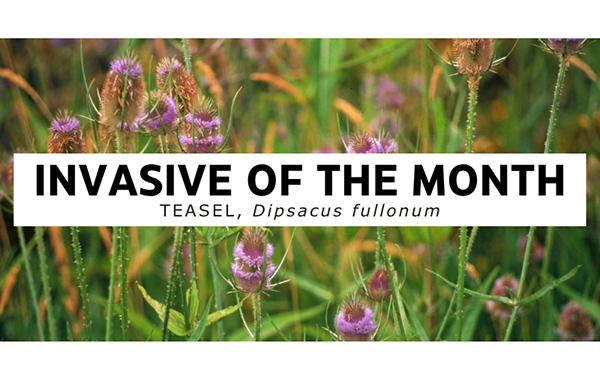
Invasive of the Month
By East Kootenay Invasive Species Council
Teasel (Wild teasel) is a biennial plant that prefers sunny locations and can grow in a range of wet to dry soils.
Originally introduced to North America in the 1700’s for wool production from its native range of Europe, Asia and North Africa, it has spread to natural spaces where it is inedible to wildlife. Spreading through seed dispersal, it typically invades meadows, pastures, roadsides, and disturbed areas.
Teasel is designated as a Regional Containment/Control species by the BC Provincial Priority Invasive Species List.
IDENTIFICATION:
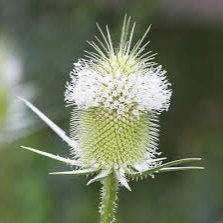 Flowers: Form in cone-shaped, spiny clusters. Individual flowers have white petals fused into a tube with four purple lobes. Beneath each flower cluster are several long, slender, stiff bracts that curve upward, surrounding the flowerhead.
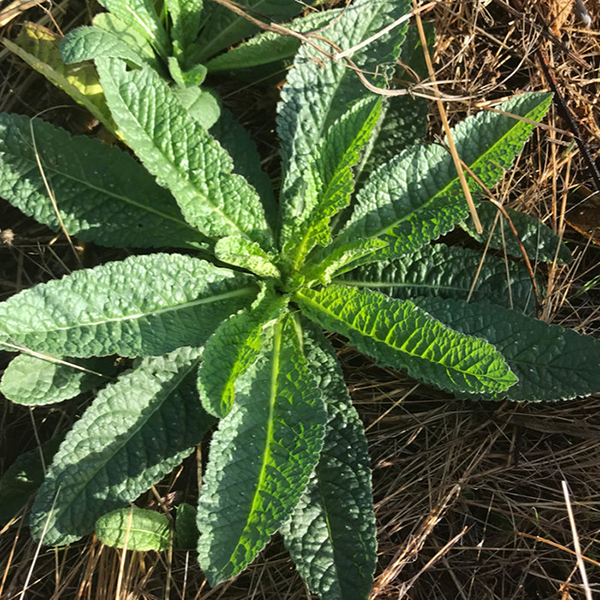
Leaves: Stem leaves are lanceolate, simple, and opposite. Basal leaves are elliptic-oblong, crenate, and can grow up to 40 cm long. Short spines are present on leaf surfaces and along midveins, especially on the undersides.
Stems: Erect stems grow 0.5 to two m tall with few branches. Stems are ridged and become increasingly spiny toward the upper portions, including on the bracts.
Other: Plants are biennial. Mature (dead) plants turn brown and woody and often persist standing through winter into the following year.
IMPACT:
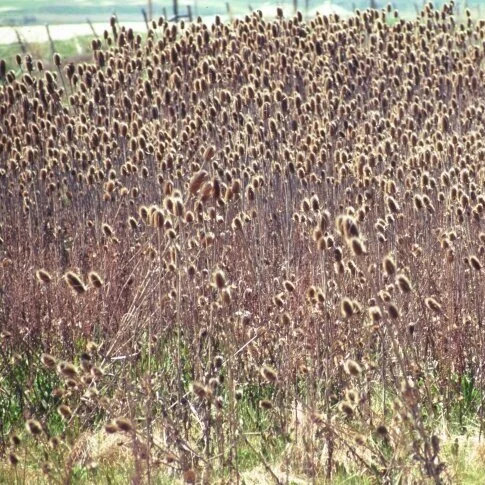
 Agricultural: Forms dense colonies that are unpalatable to livestock, reducing forage availability in pastures and meadows. As it spreads, it can significantly limit grazing land and overall agricultural productivity.
Ecological: Teasel creates dense, impenetrable monocultures that crowd out native grasses and forbs, reducing habitat quality and biodiversity. This displacement negatively impacts native plant communities and the specialist insects and pollinators that depend on them, leading to more simplified and unbalanced ecosystems. While some generalist pollinators may still visit the flowers, teasel provides limited food and habitat value for most native wildlife.
Social/Recreational: Dense stands of teasel and its rigid, spiny stems can impede access to trails, shorelines, and other recreational areas, creating physical barriers that reduce enjoyment and usability of natural spaces.
MANAGEMENT:
 Mechanical: Once flowering stalks are present sever the stem right below ground level.
Plants can also be removed by digging up the roots.
Repeat cuttings of the flowering stem will help eradicate populations.
Refrain from mowing the plants as root crown fragments can disperse and resprout.
Bag and dispose of mature seedheads to prevent regrowth.
Clean all equipment and clothing before leaving the infested site.
 East Kootenay Invasive Species Council photos
The East Kootenay Invasive Species Council works to minimize the threat of invasive species that impact the environment, the economy and human health in the East Kootenay region of B.C., and we couldn’t do it without you! as a non-profit, we rely on grant funding and the generous support of our community to operate. Your donation will help us continue to protect the East Kootenay from invasive species. Donate here.