Home »

Students: watch for scams going back-to-school
As students prepare to return to class, many are also searching for housing, buying school supplies and technology, and looking for part-time or flexible employment.
With so many time-sensitive decisions happening at once, Better Business Bureau (BBB) is reminding students and families to slow down, verify who they are dealing with and watch for common scam tactics.
 According to the 2025 BBB Scam Tracker Canada Risk Report, employment scams were the No. 1 riskiest scam for Canadians aged 18-24 and 25-34. Online purchase scams ranked No. 2 for both age groups.
“Back-to-school season can mean making several expensive and time-sensitive decisions at once, from signing a lease and buying a laptop to accepting a new job,” said Neesha Hothi, BBB Director of Marketing and Communications. “That is exactly when it is worth slowing down. Take the time to verify who you’re dealing with, question anything that feels unusual and be especially cautious when someone is pressuring you to send money or personal information quickly.”
BBB is highlighting three areas where students should use extra caution this back-to-school season.
EMPLOYMENT SCAMS
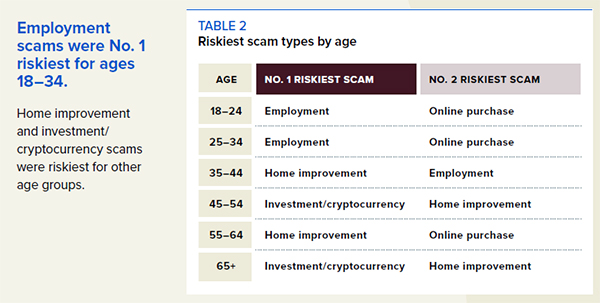 Employment scams were the No. 1 riskiest scam for Canadians aged 18-34 in 2025 and ranked No. 3 among all scam types reported in Canada. The median reported loss for employment scams was $1,500.
Scammers may impersonate legitimate employers, copy real job postings or offer attractive work-from-home opportunities. Some scams involve fake cheques or requests to purchase equipment. BBB has also seen online job scams in which victims are initially paid for tasks such as posting product reviews, then told they must deposit additional money or pay fees or taxes before they can access their earnings.
BBB tips for job seekers:
Watch for imposters. Check the employer’s official website or job board to confirm that the position actually exists.
Research the company. Search the business at BBB.org and look into its reputation before providing personal information.
Pay attention to how you are being contacted. Look at the sender’s email address and whether the hiring process includes a legitimate interview. If something feels unusual, independently contact the company through its official phone number or website.
Never pay to get a job. Be cautious if an employer asks you to pay upfront for equipment, training, fees or other expenses before beginning work.
Be wary of unexpected or oversized cheques. Fake cheque scams may involve sending a cheque and asking the recipient to purchase equipment or return a portion of the funds before the cheque is discovered to be fraudulent.
ONLINE PURCHASE SCAMS
 Online shopping scams continue to pose a significant risk to consumers. In 2025, online purchase scams represented 40.7% of Canadian scam reports, up from 32.2% in 2024. More than 90% of people who reported an online purchase scam lost money.
For Canadians aged 18-24 and 25-34, online purchase scams were the No. 2 riskiest scam type reported in 2025.
As students shop for laptops, textbooks, furniture, clothing and other back-to-school essentials, BBB recommends:
Don’t shop on price alone. Scammers often use unusually low prices or hard-to-find products to attract buyers.
Avoid impulse purchases from social media ads. Scammers may promote convincing websites and steep discounts, only to deliver nothing or send counterfeit products.
Research the seller before buying. A professional-looking website does not guarantee that a business is legitimate. Search for independent information about the company and check BBB.org.
Be careful when using online marketplaces. Whenever possible, inspect the product before paying and be cautious about requests for deposits or “holding fees.”
Consider paying by credit card. Credit cards may provide additional protections and make it easier to dispute an unauthorized or fraudulent transaction. Review the protections offered by your card issuer.
RENTAL SCAMS
Finding housing can be stressful, particularly for students moving to a new city or trying to secure a rental before the school year begins. Scammers may copy legitimate rental listings, use photos from another property or pressure prospective tenants to send a deposit before they have had an opportunity to properly verify the rental.
BBB tips when searching for a rental:
See the property before sending money whenever possible. If you cannot visit personally, consider having someone you trust inspect it on your behalf.
Verify the person offering the rental. Confirm that you are dealing with the legitimate landlord, property manager or authorized representative.
Be cautious about pressure to pay immediately. Take time to verify the property and rental terms before sending a deposit.
Get the agreement in writing. Ensure there is a proper tenancy agreement containing the relevant names, addresses and terms, signed by both parties.
Search the listing online. Scammers may copy photos and descriptions from legitimate listings. Searching the address, images or portions of the description may uncover duplicate or inconsistent listings.
Students should remain alert to unexpected requests for money or personal information and take the time to independently verify businesses, employers and listings before making a commitment.
Consumers can visit BBB.org to research businesses and find additional scam-prevention information. Anyone who encounters or loses money to a scam is encouraged to report it through BBB Scam Tracker at BBB.org/ScamTracker, where consumers can also search reports submitted by others.
e-KNOW file photos