Home »
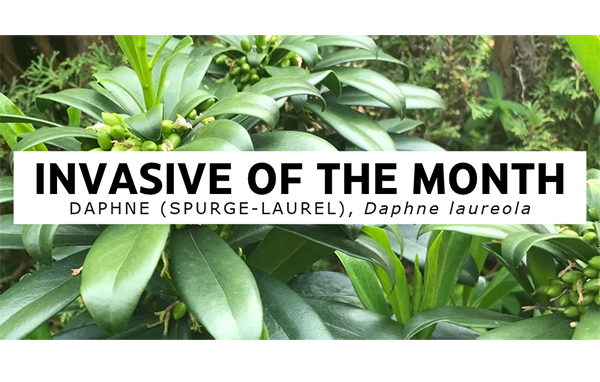
Invasive of the Month
By East Kootenay Invasive Species Council
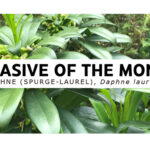
Daphne (Spurge-Laurel) was a popular ornamental in gardens at one time due to its glossy, rhododendron-like leaves and fragrant flowers.
It was introduced from it’s native range of Europe, and a small portion of Northern Africa. It is tolerant of both sun and shade and rapidly takes over native vegetation by forming dense thickets in a range of ecosystems. It is especially suited to take over forest understories where it can form dense monocultures and outcompete native vegetations. It can spread through seed or vegetative shoots and its black berries are loved by birds.
Daphne is listed as a poisonous plant by the Canadian Poisonous Plants Information System, and as a toxic plant by Worksafe BC. Its toxic sap can cause skin rashes, nausea, swelling of the tongue, and coma.
Daphne is designated as Management species by the BC Provincial Priority Invasive Species List.
IDENTIFICATION:
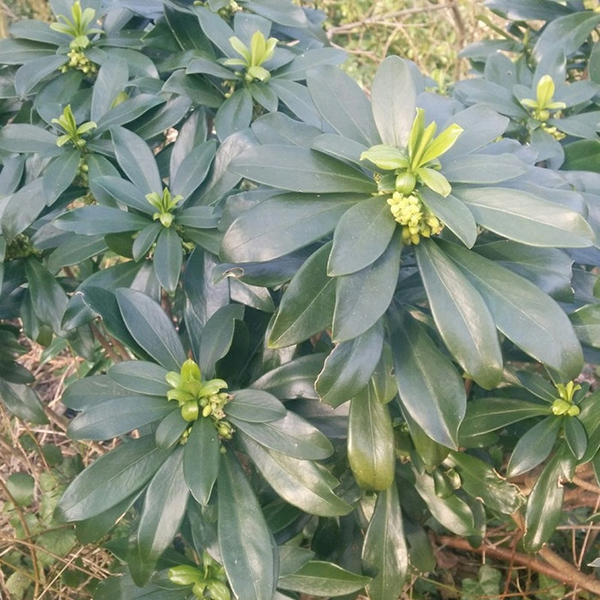
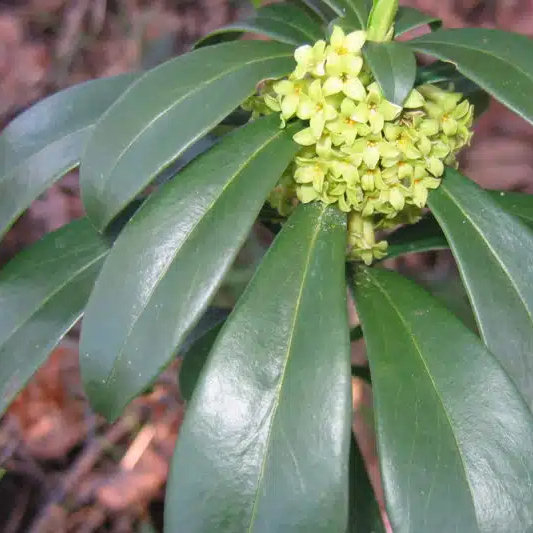 Daphne grows to 1.5 m in height in either a single stem, or a multi branching shrub. As it gets taller, only the topmost section of the plant has leaves.
In the spring, axial clusters of tiny, fragrant, light yellow-green flowers form between the leaves. It’s berries are black when mature.
Its leaves are dark green, glossy, oval-shaped and grow in a spiral pattern around the top of the stem.
IMPACT:
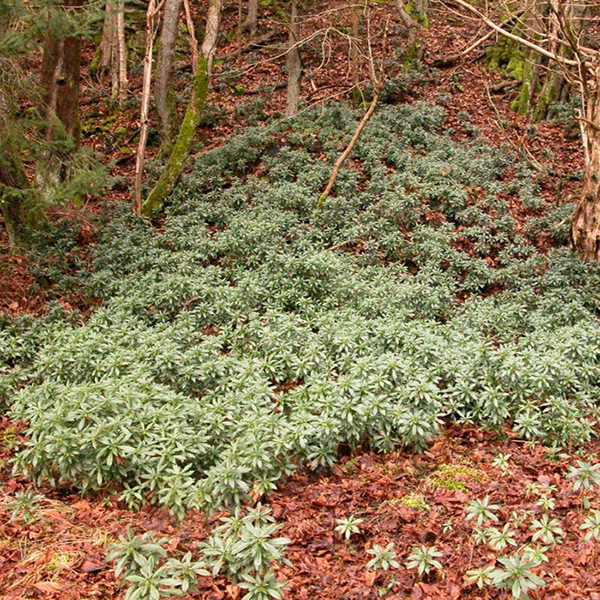 Ecological: Daphne forms dense thickets in forest understories, crowding out native plants and blocking sunlight from reaching the forest floor. It can suppress native wildflowers and ground cover, disrupt forest regeneration, and threaten sensitive ecosystems. Because it is toxic and unpalatable to deer, native vegetation may be browsed more heavily while Daphne continues to spread. Its berries are dispersed by birds and rodents, and underground shoots allow established patches to expand.
Economic: Can be costly and labour-intensive to manage due to its ability to form dense, persistent patches and spread into natural areas.
Health impacts: All parts of the plant, including its leaves, bark, sap, and berries, are toxic. Contact with the sap can cause severe skin irritation, blistering, and painful eye irritation. Ingestion can cause serious poisoning, including swelling of the mouth and throat, vomiting, difficulty swallowing, and potentially death. Cutting or burning the plant may also release harmful compounds that can cause respiratory irritation.
MANAGEMENT:
 Personal Protective Equipment: Always wear long sleeves, thick gloves, and eye protection when handling Daphne, as all parts of the plant contain toxic compounds that can irritate the skin and eyes.
Hand-Pulling: Small plants can be hand-pulled when the soil is moist, taking care to remove the entire root system. Avoid direct contact with the plant.
Cutting: For mature plants, cut the main stem below the root collar or just below the soil line to help prevent regrowth. Use hand tools such as pruners, loppers, or a handsaw. Avoid weed whackers and chainsaws, which can spread toxic sap.
Disposal: Do not burn, chip, or compost Daphne. Securely bag plant material and dispose of it at the transfer station.
Follow-Up: Monitor treated areas for at least two to three years, removing new seedlings and regrowth promptly. Repeated monitoring and removal are important to prevent established patches from returning.
East Kootenay Invasive Species Council photos
 The East Kootenay Invasive Species Council works to minimize the threat of invasive species that impact the environment, the economy and human health in the East Kootenay region of B.C., and we couldn’t do it without you! as a non-profit, we rely on grant funding and the generous support of our community to operate. Your donation will help us continue to protect the East Kootenay from invasive species. Donate here.