Home »
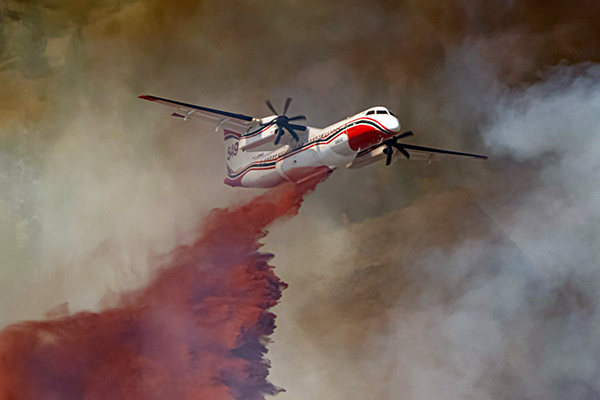
Airtanker use depends on the situation
By BC Wildfire Service
Why don’t airtankers just drop water or retardant on every wildfire?
Airtankers are an important tool in wildfire response, but they aren’t a solution for every fire or every situation.
Before aircraft are sent to a wildfire, we consider a variety of factors, including fire behaviour, terrain, visibility, weather conditions, smoke, aircraft safety and whether a drop can be completed effectively.
In some cases, steep terrain, turbulent winds, poor visibility or heavy smoke can make aerial operations unsafe. In others, a drop may have little impact on fire behaviour or may not be the most effective use of available aircraft.
Even when airtankers are working on a wildfire, they are only one part of the response. Aircraft support ground crews by slowing fire growth, cooling hotspots and helping protect values, but they do not extinguish wildfires on their own.
Sometimes the most effective response involves airtankers. Sometimes it involves helicopters. Sometimes it’s heavy equipment, ground crews or specialized personnel. Most often, it’s a combination of many tools working together.
The goal isn’t simply to get aircraft over a wildfire, it’s to use the right resource, in the right place, at the right time.
Learn more about airtankers and how they operate.
Lead image by Lucas Cain