Home »
DRIPA Jam Session
By Peter Christensen
Op-Ed Commentary
 Last Saturday we migrated north, guitars and mandolin stashed in the trunk, for a luncheon and music gathering with friends. Coming together to sing and tell stories is as close to tradition as we ‘settlers’ get.
What with Lower Mainland/Victoria sacraments of reconciliation being thrust upon us daily by desacralized upper-middle class British Columbia knowledge workers and Indigenous apparatchiks who worry the rights of the descendants of Indigenous citizens that claim inherent control of the province’s resources and land versus the property entitlements of ‘colonizers’, immigrants and post-modernists, it is, these days, difficult to enjoy the security of home and place. The Saturday gathering was a welcome relief from the waffling of Premier Eby’s Government.
Our host reminded me, when I referred to their location as being Spillimacheen, that they identified with Galena. When I said, “Where is Galena?” he said, “Right here.”
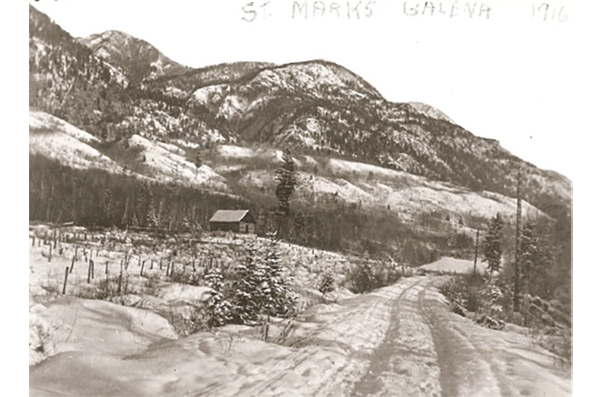
Galena, a pioneer post office location along the Columbia River south of present day Spillimacheen, was a long-standing way point in the Windermere Valley, existing from about 1889, until it was replaced by Spillimacheen in 1946. The settlement of Galena ‘recognized’ on July 1, 1889 when a post office was opened under the operation of Peter McIntyre was made legitimate even though the steamboat landing was a mile and half further north at Spillimacheen.
The name itself comes from a well-known ore, galena, or lead sulphide (PbS). Galena is the main ore from which lead can be extracted and can also contain from one to two per cent silver as a byproduct, adding to its value. Galena was the dominant ore that was prospected and mined for in the Purcell Mountains of the Windermere Valley during pioneer times.
What made this gathering of musicians and friends unique is that most of us had known each other for 50 years. Two of the group had successful careers in the greater ‘music industry’ and though the difference in skill was obvious the binds of friendship brought respect to each effort. The beauty of 4/4 time is as long as a steady rhythm is maintained anyone from the professionally accomplished to those with basic skills can play along.
We sat in a living room circle and took turns playing and singing a song; each person played a song they had written. These original songs had a professional feel to them; we filled in and listened. The songs were about living ‘the life’ and doing the best we could at putting hardships in the past and adapting to the future.
In between songs information on personal goals, children’s progress or hopes for future projects were shared. A pause between songs for conversation and telling of life events created a change in focus enabling another person to feel it was their turn to speak or sing.
The session did not last long, a couple of hours, it was only mid-afternoon by the time we quit, now that was different from olden days.
With a little diligence one can understand Premier Eby’s position and the position of the First Nations. Identity | indigenousfoundations provides a concise insight into the ‘colonial’ position.
What is not easy to find or define is the post-modern position of contemporary citizens. This is a work in progress.
Lead image: St. Mark’s Presbyterian Church at Galena, 1916. “Snowy road and mountains with lone St. Mark’s Church,” 1916. Windermere Valley Museum and Archives, C6.