Home »
Monte Cassino a symbol of the waste of war
By Ian Cobb
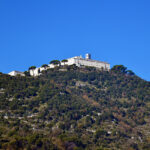
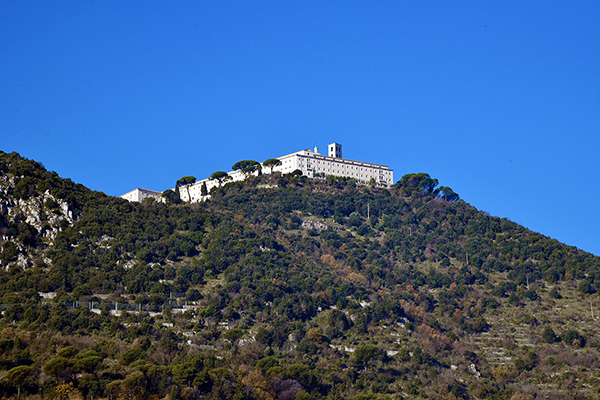
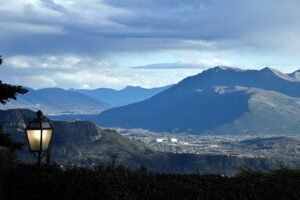
One of the purest symbols of the waste of war stands 520 metres above the Liri Valley about 135 km southeast of Rome.
The Abbey of Monte Cassino is a site of perseverance and re-birth along with being one of the most sacred sites in Christendom.
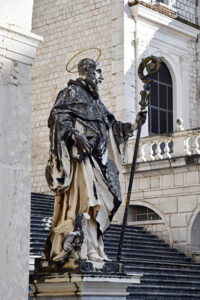
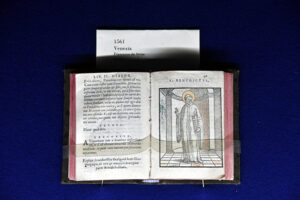
Around about A.D. 529, Saint Benedict of Nursia began construction of the abbey and monastery at the lofty site, once home to an ancient pagan temple dedicated to Apollo.
It was the beginning of the Benedictine order and the site where St. Benedict penned his monastic “Rule,” which became a foundational guide for Western monastic life.
In the pantheon of Christian saints, St. Benedict is seated in the upper tier, as he is considered the Father of Western Monasticism and is the primary Patron Saint of Europe.
He is also widely regarded as one of the chief architects of Western civilization. Through the Middle Ages, the abbey became one of Europe’s most influential and richest centres of culture and education. As a result, a great deal of priceless antiquities were acquired, along with ancient manuscripts and writings.
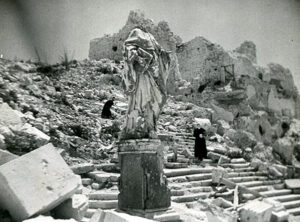
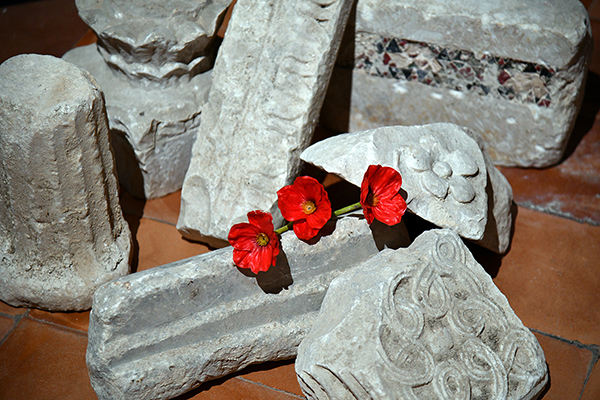
During its nearly 1,500 years of existence, the abbey was destroyed and rebuilt several times. It was sacked by Lombards in A.D. 570 and Saracens in 883 and destroyed by an earthquake in 1349 and re-built to become the imposing and majestic building one sees perched above the small city of Cassino today.
But what you are seeing today is a near exact replica of the ancient structure, which was blown to smithereens by an estimated 1,400 tonnes of high explosives courtesy an Allied aerial bombardment on February 15, 1944.
The Allies believed the monastery was a Nazi observation post, part of the Gustav Line that ran across the Italian peninsula from the Tyrrhenian Sea over the Apennine Mountains, in which Monte Cassino is perched, to the Adriatic Sea.
In late 1943 the Allies had been gaining ground in Italy, pushing north from Naples toward Rome but then came the Gustav Line.
From January to March 1944, the Allies struggled with determined Nazi resistance thanks to their geographical advantage in the Apennines, which also brought freezing cold, drenching rains, endless mud and all side effects of gravity, not to mention disease.
Four major meat-grinding assaults were undertaken by the Allies during that period, with soldiers from United Kingdom, United States, Poland, France (including Free French and colonial troops), New Zealand, India, Canada, Newfoundland and South Africa taking part.
As battlefield casualties continued to grow, with an estimated 20,000 dead for the Allies and 20,000 for the Nazis, the Allies decided flatten the ancient abbey.
It was not a light decision as the importance of the site was not lost on Allied leadership and they heard, repeatedly, from Italian leaders about its place in the hearts of their people.
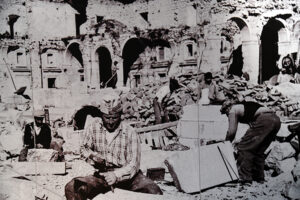
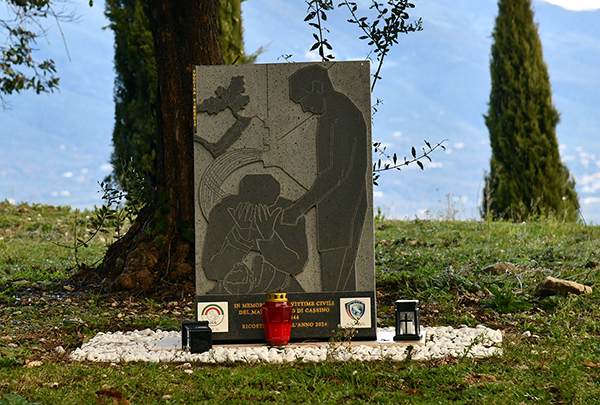
Suffering the most during these battles was the town and people of Cassino. The town was completely obliterated and what you see today is one of Italy’s ‘newest’ cities.
 In March 1944, during the third chapter of the Battle of Monte Cassino, about 200,000 artillery rounds were delivered by 746 artillery pieces onto the town and enemy positions below the ruined abbey.
During the entire five-month campaign, Allied forces fired hundreds of thousands of shells along with massive air bombardments. Yet still the abbey stood strong and Nazi defences continued to be repaired.
As a result, hundreds of Cassino residents had scrambled their way to the abbey for safety.
 While the Nazis were the enemy, some individuals played key roles in the preservation of Monte Cassino’s abundant treasures.
Knowing the Allies were going to begin assaulting the abbey, which the Germans weren’t occupying (they were located beyond the abbey and around it, but not inside it), Lieutenant Colonel Julius Schlegel and Captain Maximilian Becker organized and executed the rescue of the historical and cultural treasures. They did this after learning that Hermann Göring had his greedy eyes on the abbey’s wealth.
Over 80,000 archival documents, 70,000 printed volumes, manuscripts, books, tablets and art pieces (including works by Titian, El Greco, and Goya) were trucked to The Vatican, and kept away from Göring.
 The German officers also tried, in vain, to encourage the Cassino and area residents holed up in the abbey to flee prior to the February aerial bombardment. They stayed and 230 were killed during the devastating attack. Another 2,000 Cassino and area residents were killed prior to then.
Following the destruction of the abbey, Nazi troops moved into the rubble, which made for fantastic cover and resulted in the deaths of thousands more troops on both sides.
On the morning of May 18, 1944, Polish troops commanded by General Władysław Anders managed to reach and sweep through the ruins and knock a hole open in the Gustav Line.
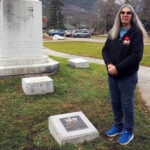
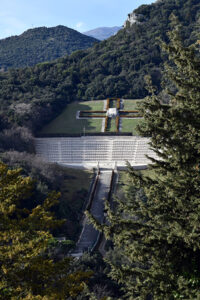 The Allies suffered over 55,000 casualties in the effort, including 923 Poles killed in the final push. Their graves are tended today beside the abbey (right), which was re-built and re-consecrated in 1964 under the motto “Succisavirescit“ (a cut root returns to bloom).
The site remains an active Benedictine monastery, basilica, crypt housing the relics of St. Benedict and St. Scholastica, and is a popular pilgrimage and tourism destination.
It is also a distinct sore point with many Italians, who still consider the destruction of the abbey a war crime and an affront to humanity.
Seeing the abbey as it is now, as much a museum as it is a spiritual enclave, and looking out from its viewpoints, one can see why it was considered so strategically important in the age of artillery. At the same time, the destruction of the abbey and the way the local population was treated as insignificant remains a blight on humanity and pure symbol of the waste of war.
 I went to Monte Cassino because I am a world war history buff. I wanted to see the place because of its importance in the grand scheme of how the Second World War unfolded; a campaign Canadian troops played major roles in, though only a small part in taking the actual abbey.
Canadian involvement in breaking the Gustav Line and, once that was knocked aside, the Hitler Line was still paramount to collective Allied success in the Italian campaign.
During the Allied spring offensive, Operation Diadem, the 1st Canadian Armoured Brigade provided critical heavy firepower and tactical ingenuity needed to breach the heavily fortified German defences between May 11 and May 15, 1944.
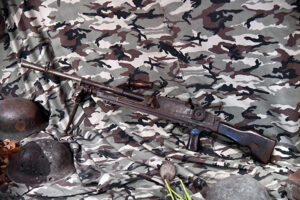 The 1st Canadian Armoured Brigade—comprising regiments like the Calgary Tank Regiment, the Three Rivers Regiment, and the Ontario Regiment—was tasked with supporting the 8th Indian Infantry Division in establishing a vital bridgehead.
On May 23, they launched an attack against the Hitler Line. The Canadians successfully smashed through this second barrier and liberated Frosinone on May 31, but it came at a terrible price—including the bloodiest day of the entire Italian campaign for Canadian troops. In total, the Liri Valley operations cost Canada roughly 800 killed and 2,500 wounded.
I left Monte Cassino impressed by Italian perseverance and commitment; how the sacred site was rebuilt to exact standards of the building blown to smithereens in 1944.
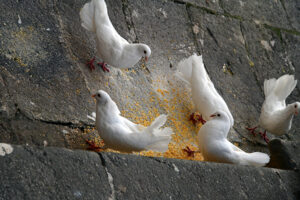
And I held an entirely new viewpoint of the battle and campaign – one where Italians and Italy were not ‘the enemy’ but a people and nation swept up in the carnage of Benito Mussolini’s fascist regime. It was the people who suffered the most, and doubly so when one contemplates the spiritual wounds inflicted by the destruction of such an ancient and sacred site as the Abbey of Monte Cassino.
But Italy is an ancient land and the horrors of war have visited its people hundreds of times over the millennia. History is viewed in layers as today walks over yesterday and yore was constructed atop the start of things – just like Cassino today, a city of 35,000 souls with unusual wide streets and only ancient relics atop and alongside Monte Cassino as reminders of their past.
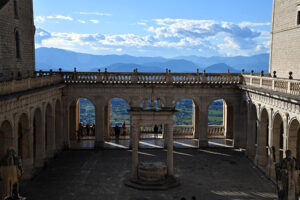
 Lead image: The re-constructed Abbey atop Monte Cassino, overlooking the Liri Valley and Cassino. Photos by Ian Cobb and Carrie Schafer
e-KNOW